Finding a reliable pediatric walker for toddlers involves balancing stability, adjustability, and ease of use. The selections below cover posterior walkers and foldable options designed to support early walkers, improve posture, and promote safe independence. Each entry includes core features to help you compare at a glance, as well as practical notes on height adjustment, wheel types, and portability.
| Product | Brand | Key Feature |
|---|---|---|
| Inspired by Drive KA1200-2GKB Nimbo Posterior Walker | Inspired by Drive | Lightweight, height-adjustable posterior walker with 5-inch wheels and foldable design |
| Klip- Lightweight Posterior Rollator Walker (Medium) | CIRCLE SPECIALTY | Posterior configuration, 4 wheels, adjustable height, promotes upright posture |
| Klip- Lightweight Posterior Rollator Walker (Large) | CIRCLE SPECIALTY | Similar versatile design with larger frame and adjustable height |
| McKesson Junior Folding Walker for Children | McKesson | Sturdy aluminum frame, high weight capacity, easy push-button height adjust |
| Baby Walker Foldable With 9 Height Adjustments | Pvauert | Nine gear height adjustments, foldable, extensive height and seat adjustments |
Inspired by Drive KA1200-2GKB Nimbo Posterior Walker

The Nimbo Posterior Walker from Inspired by Drive is designed to support safe ambulation with a posterior stance. It features a lightweight aluminum frame that remains durable while allowing easy transport. Height adjustment accommodates growing toddlers, and the walker folds for convenient storage. Its 5-inch wheels offer stable navigation on typical indoor surfaces, while a soft-textured handgrip enhances comfort during use. A front-wheel swivel lock with a one-directional mechanism helps prevent backward movement, contributing to a controlled walking experience.
Klip- Lightweight Posterior Rollator Walker (Medium)

The Klip Walker/Gait Trainer in medium size emphasizes practical performance with two 5″ front swivel wheels for easy turning and two 5″ rear wheels that lock in one direction for stability. A foot-activated lock switch enables quick changes between swivel and non-swivel modes, offering precise control during mobility training. The design supports both posterior and anterior configurations, fostering independent movement and upright posture. Adjustable height and latex-free grips reduce hand strain, making it a versatile option for toddlers and older children with special needs.
Klip- Lightweight Posterior Rollator Walker (Large)
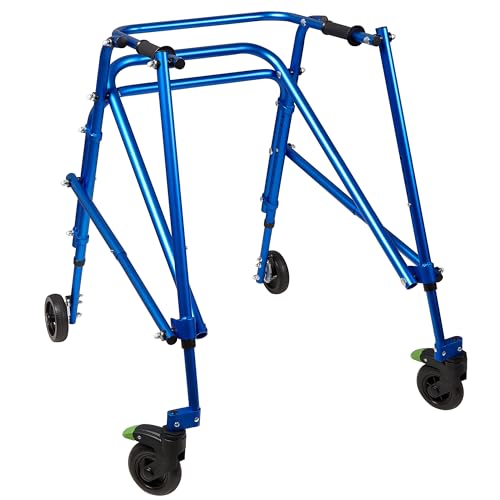
The large variant of the Klip walker shares core features with its medium sibling: a posterior configuration, dual 5″ front swivel wheels, rear wheels with controlled non-swivel movement, and a foot-activated wheel lock. This model supports an upright stance and provides ample room for longer legs, which can be helpful as children grow. Adjustable height and comfortable grips aim to reduce fatigue during longer sessions of standing and walking, with portability preserved by foldable construction.
McKesson Junior Folding Walker

The McKesson Junior Folding Walker is built for pediatric use with a sturdy aluminum frame supporting up to 350 pounds. Height is adjustable via a push-button mechanism, enabling quick personalization for different children or as they grow. The walker’s design emphasizes stability and balance for children who struggle with standing or walking, making it a practical option for rehabilitation or post-injury recovery. Vinyl-contoured hand grips add comfort during prolonged use.
Baby Walker Foldable With 9 Height Adjustments

This baby walker from Pvauert features a robust construction with a thickened aluminum frame and a stable four-corner support design to minimize rollover risk. It offers nine height adjustment modes, including body and seat height, supporting a range of baby sizes from early walkers to larger toddlers. The foldable arms facilitate compact storage, and the product size accommodates a baby up to about 30 pounds. This model is intended for exploratory development and controlled mobility in safe environments.
Buying Guide: Key Purchase Considerations
- Intended use and age range: Choose a walker that aligns with your child’s age, weight, and mobility goals. Some options are better suited for early walkers, while others support longer-term use as kids grow.
- Stability and posture: Posterior walkers are designed to encourage upright posture and step alignment, which can aid gait development. Check wheel configurations and locking mechanisms for stability.
- Adjustability: Height adjustability is essential as a child grows. Look for models with straightforward push-button or lever adjustments and seat height variations where applicable.
- Wheels and maneuverability: Smaller, swiveling front wheels improve turning radius on indoors, while rear wheel locks or directional controls add safety on slopes or uneven surfaces.
- Weight capacity and materials: Aluminum frames offer a balance of strength and lightness, with weight limits important for safety and longevity.
- Portability and storage: Foldable designs help with transport and storage in small homes or vehicles.
- Safety features: Non-slip grips, secure wheel locks, and anti-roll design reduce the risk of falls and injuries during use.
- Maintenance: Look for washable grips and easy-clean surfaces to maintain hygiene in pediatric equipment.
- Clinical compatibility: If prescribed, verify compatibility with any prescribed therapy or rehabilitation plan and consult a clinician if needed.
Across these options, the choice hinges on stability, growth compatibility, and how the walker will be used day-to-day. For caregivers, a model that folds compactly and adjusts quickly often provides the best balance of convenience and support. For therapists or clinicians, prioritizing upright posture, controlled mobility, and durability can guide the best long-term fit.