Answering the need for accurate pH measurements in hydroponics, this guide highlights top pH test kits and meters. Each option suits different grow setups, from small home systems to larger setups. If you’re a hobbyist, a simple liquid-based kit may work best; if you manage multiple reservoirs, a digital meter provides quick, repeatable readings. Below, you’ll find five carefully chosen products with clear pros, best-use scenarios, and practical cautions. A quick summary table follows to help you compare at a glance.
| Product | Best For | Why Pick It |
|---|---|---|
| General Hydroponics Ph Control Kit | Starter to mid-sized systems | All-in-one kit with pH Up/Down liquids, indicator, and chart for easy, reliable results |
| General Hydroponics Ph Test Kit, 1 oz | Simple, low-cost testing | Compact fluid-and-strip testing in a small package |
| Alkaline Water pH Test Kit (EHM) | Water-only testing for clear liquids | Easy-to-use squeeze bottle with US-made components |
| VIVOSUN Digital pH and TDS Meter Kit | All-in-one digital Readings | 3-in-1 meter with pH, TDS, and temperature readings |
| GIDIGI Digital 4-in-1 pH Tester | Multi-parameter measurement | pH, TDS/EC, and temperature in one device with hydroponics focus |
General Hydroponics Ph Control Kit

Best for: Home growers starting with a complete kit. This all-in-one option includes pH Up and Down liquids, a testing indicator, a test tube, an eyedropper, and a pH level chart. The integrated setup simplifies pH management in one reservoir or a small system, reducing the need to buy separate components.
Why chosen: Reliability and all-in-one convenience. The kit provides the core items needed to measure and adjust pH, helping to stabilize nutrient uptake. The included chart supports quick, repeatable readings without a separate meter.
Caution: It relies on liquid reagents and a visual indicator, which can be slower and less precise than digital meters for frequent testing. Suitable for steady routines rather than high-frequency monitoring.
General Hydroponics Ph Test Kit, 1 oz

Best for: Minimalists and budget-conscious growers. This compact option focuses on essential pH testing with test fluid and test strips in a small bottle.
Why chosen: Strong for quick spot checks or when you need a portable, inexpensive test method. The reduced kit size makes it easy to store and use on the go.
Caution: Fewer components mean fewer troubleshooting aids; not ideal for frequent, multi-reservoir adjustments.
Alkaline Water pH Test Kit (EHM)
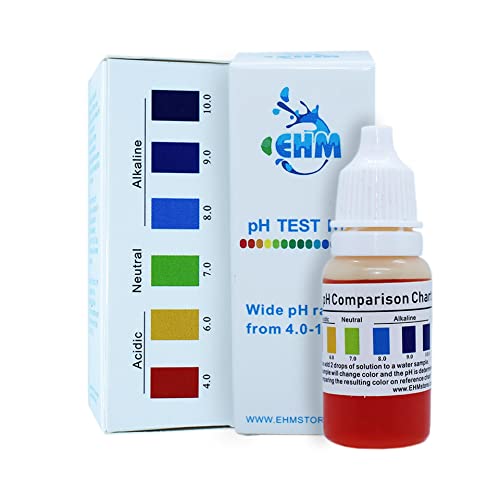
Best for: Clear liquid testing in hydroponic water or other transparent solutions. Ideal for hobbyists who want a straightforward approach and US-made components.
Why chosen: The kit emphasizes ease of use with a squeeze bottle and a simple testing process. It’s a practical option for hobby systems where rapid checks are needed.
Caution: Not a high-precision meter. May not be best for large commercial setups requiring consistent, automated monitoring.
Hydroponics pH Up Down Solution Kit (GIDIGI)

Best for: Growers who prefer a concentrated, economical adjustment system. The kit includes both pH Up and Down solutions plus testing strips and a chart.
Why chosen: Precise control with a formula that aims to minimize waste. The included measuring tools support consistent dosing for multiple reservoirs.
Caution: Relying on color strips may be less precise than digital readings in some setups. Best when used with a regular monitoring routine.
VIVOSUN Digital pH and TDS Meter Kit

Best for: Growers who need quick, precise digital readings for pH, TDS, EC, and temperature. Suitable for larger or multi-reservoir systems where rapid adjustments are routine.
Why chosen: A 3-in-1 tool consolidates essential measurements into one display, enabling better nutrient management. The device supports a wide measurement range and temperature compensation.
Caution: Digital meters require careful calibration and occasional maintenance to maintain accuracy. Not ideal for very small or single-reservoir setups if cost is a concern.
GIDIGI Digital pH Tester 4-in-1

Best for: Multi-application hydroponics and general water testing. This 4-in-1 meter provides pH, TDS/EC, and temperature readings with integrated hydroponics features.
Why chosen: The device supports simultaneous measurement, helping to time nutrient adjustments with pH changes. Automatic temperature compensation improves accuracy across varying conditions.
Caution: Some users may need to learn the interface to access all functions efficiently. Ensure calibration routinely for best results.
Buying Guide
- What you test: Choose liquid-based kits for simple, occasional checks or digital meters for frequent, multi-parameter monitoring.
- Number of reservoirs: A multi-channel hydroponic setup benefits from a digital meter or a kit with multiple test tools for consistent results.
- Calibration needs: Digital meters often require periodic calibration with standard solutions; consider a kit that includes calibration instructions.
- Maintenance: Liquid indicators and test strips can expire; digital meters need battery management and occasional storage care.
- Budget vs. accuracy: Basic kits are inexpensive but less precise; digital meters offer precise readings and faster results, at a higher upfront cost.
- Ease of use: For beginners, an all-in-one kit reduces guesswork; for experienced growers, a standalone digital meter may streamline workflow.
Frequently Asked Questions
- What pH range is best for most hydroponics?
Most nutrient solutions perform best around 5.5 to 6.5. - Can I rely on pH strips for accurate readings?
Strips are convenient but can be less precise than digital meters, especially for exact dosing. - Should I calibrate my pH meter often?
Yes, calibrate per manufacturer guidance, especially when readings drift or after storage breaks. - Is a single kit enough for a large system?
For multi-reservoir setups, a digital meter or multiple test tools is recommended to maintain consistency. - What is the advantage of a 3-in-1 or 4-in-1 meter?
It provides pH, TDS/EC, and temperature in one device, saving time and reducing tool clutter. - Are liquid pH adjusters safe for all systems?
Most are designed for hydroponics, but always follow product directions and test before large-scale adjustments.