Direct answer: if you need reliable, CDC-aligned vaccine storage, choose compact and ADA-compliant models for small clinics or larger upright units for pharmacies. The top picks below cover compact under-counter fit, glass-door visibility, and precise +2°C to +8°C ranges with alarms and probes for continuous monitoring. These are best for small practices, hospital outreach, and vaccination clinics that require compliant temperature control and easy monitoring.
Buyer’s note: The following table highlights five strong options, showing capacity, door type, and key features to help you compare at a glance.
| Product | |||
|---|---|---|---|
| EQTemp 1.94 cu. ft Vaccine Refrigerator (ACR22G) | 1.94 cu.ft. (55 L) | Solid door with glass/bezel and interior LED | Small clinics needing compact vaccine storage with external readouts |
| Summit ACR46GL Medical Refrigerator | 2.65 cu.ft. (75 L) | Glass door, dual-pane | ADA-compliant, versatile compact vaccine storage |
| ACCUCOLD AFZ2PVBIADA Medical Freezer | 2.47 cu.ft. | Undercounter, white | Vaccine storage requiring -30°C to -10°C range |
| ACCUCOLD ACR45L Vaccine Refrigerator | 2.65 cu.ft. | Under-32″ height, white | ADA-compliant, easy integration under counters |
| Summit ARS6PV456 Vaccine Refrigerator | 6.0 cu.ft. | Upright with glass door | Higher-capacity clinical vaccine storage |
EQTemp 1.94 Cu. Ft Vaccine Refrigerator ACR22G
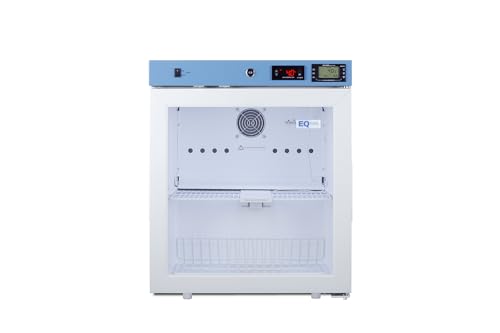
The ACR22G is built specifically for medical use with an external temperature readout and high/low tracking. It uses a buffered probe in a glass-bead bottle for improved accuracy and maintains a 2ºC to 8ºC interior. An audible alarm activates if the temperature strays, and a pre-installed 3/8″ access port supports user monitoring equipment integration. This compact unit includes adjustable shelves, internal LED lighting, and automatic defrost. Best for small clinics needing clear readouts and reliable, in-room vaccine storage.
Who this is best for: clinics or mobile health services needing a compact, secure, temperature-accurate vaccine storage solution with straightforward monitoring.
Limitations to note: Small footprint means lower total storage; plan for batch sizes accordingly. Best for 1–2 standard vaccine lots rather than large inventories.
Summit Appliance ACR46GL Medical Refrigerator

The ACR46GL is purpose-built for pharmacy, medication, and vaccine applications, designed to meet CDC/VFC guidelines. It features an audible temperature alarm and a pre-installed 3/8″ probe hole for monitoring equipment. With 2.65 cu.ft. capacity, a double-pane glass door, and a hospital-grade cord, this unit balances security and accessibility. Best for clinics needing a slightly larger capacity without sacrificing compact form or ADA compatibility.
Who this is best for: pharmacies or clinics that require ADA-compliant dimensions with integrated monitoring readiness and a visible glass door for quick inspections.
Limitations to note: Slightly taller installation height; ensure space aligns with ADA-related clearance and counter height in the facility.
ACCUCOLD AFZ2PVBIADA Medical Freezer

This undercounter freezer is designed for vaccine and pharmaceutical storage with a wide temperature range of -30°C to -10°C. It fits under counters (about 32″ tall) to meet ADA guidelines and includes adjustable shelves for flexible organization. A remote alarm option and a wire-shelf layout support practical inventory management. Best for facilities requiring a dedicated low-temperature storage solution for certain vaccines or drugs that must be kept well below freezing.
Who this is best for: clinics needing a compact, ADA-compliant freezer with precise low-temperature control for certain vaccines.
Limitations to note: Not suitable for standard +2 to +8°C vaccine storage; plan dedicated inventory for frozen products.
ACCUCOLD ACR45L Vaccine Refrigerator
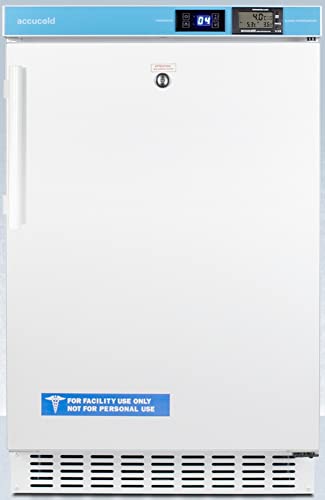
The ACR45L is designed for vaccine storage with an external high/low temperature readout and a 2–8ºC operation range. It has a slim, under-counter profile (just under 32″ high) to fit ADA-compliant spaces and includes continuous interior temperature display with a 3/8″ probe port. It ships with two adjustable wire shelves, a center fixed shelf for probe stability, and a hospital-grade cord. Best for high-traffic clinics needing accessible, compact vaccine storage with robust alarms.
Who this is best for: clinics prioritizing a compact, easily monitored vaccine refrigerator that fits beneath standard counters.
Limitations to note: Under-counter height may limit total storage; ensure inventory needs align with capacity.
Summit ARS6PV456 Vaccine Refrigerator

The ARS6PV456 is NSF/ANSI 456 vaccine storage certified and suited for pharmacy, medication, and vaccine applications. It features an interior 2°C to 8°C range, an audible alarm, a pre-installed 1/2″ probe hole, and open-door protection measures. The upright design with a glass door and automatic defrost supports easy monitoring and maintenance for moderate to large vaccine inventories. Best for facilities seeking NSF-certified vaccine storage with heightened security and sample-proof configuration.
Who this is best for: larger clinics or pharmacies needing certified vaccine storage with open-door controls and sturdy, continuous monitoring.
Limitations to note: Higher capacity means larger footprint; verify space and electrical requirements before purchase.
Buying Guide: Practical Considerations for Vaccine Refrigerators
- Temperature range and stability: Most vaccines require +2°C to +8°C. Look for models with independent probe readouts and continuous product temperature simulation to ensure accurate monitoring.
- Alarm and monitoring features: Audible and visual alarms help detect deviations quickly. A pre-installed probe port or remote alarm option can improve monitoring compatibility with your existing systems.
- Door type and accessibility: Glass doors offer visibility for quick checks, while solid doors protect contents from exposure. ADA-compliant heights and adjustable shelves aid in workflow integration.
- Capacity alignment: Choose a unit that matches current inventory and anticipated growth. Compact units suit small clinics; upright models fit larger vaccine stocks with easier organizing.
- Security and reliability: Look for factory locks, green-dot hospital-grade cords, and sturdy construction to prevent tampering in high-traffic areas.
- Installation considerations: Consider counter height, space under counters, and space between doors for airflow and door clearance. Ensure compatibility with monitoring equipment and existing electrical loads.
- Maintenance: Features like frost-free operation reduce maintenance. Interior lighting and adjustable shelves simplify daily use and inventory management.
FAQ: Quick Answers for Vaccine Refrigerator Buyers
- What temperature should a vaccine refrigerator maintain? A: Most vaccines should be stored between +2°C and +8°C, with precise readouts and alarms used to ensure stability.
- Is a glass-door refrigerator better than a solid-door for vaccines? A: Glass doors improve visibility for quick checks, but solid doors can help with exposure control. Choose based on workflow and security needs.
- Do these units require special installation? A: Many models include standard hospital-grade cords and 3/8″ probe ports. Verify space, power, and monitoring compatibility before installation.
- What is NSF/ANSI 456 certification? A: It’s a standard for vaccine storage equipment; certified units meet specific performance and reliability criteria for vaccine handling.
- Should I choose a compact under-counter model or an upright model? A: Under-counter units fit tight spaces and clinics with limited floor space; upright units offer larger capacity for higher vaccine inventories.
- How important are alarms and remote monitoring? A: Very important. They provide continuous assurance that temperatures stay within the required range, reducing the risk of compromised vaccines.