People with light sensitivity or photophobia can find relief with specialized glasses designed to filter harsh wavelengths and reduce glare. This guide highlights five effective options and explains who each is best for. The top picks are suited for indoor fluorescent lighting, computer work, outdoor sunlight, and daily wear. Ideal buyers include migraine sufferers, office workers under bright lights, students, and anyone who experiences eye strain from screens or glare.
| Product | Best For | Why It Helps |
|---|---|---|
| VERBAL Ophtalmic FL-41 Glasses | Migraine sufferers, office workers | FL-41 tint targets problematic light bands and blocks blue light. |
| Bloomoak Rose Migraine Glasses (Brown Lens) | Outdoor light sensitivity, daily wear | Dual-band blocking for 480–520nm and 590–610nm ranges. |
| hnbliv FL-41 Rose Glasses | Indoor and outdoor light sensitivity | Lightweight, rose-tinted for comfortable all-day wear. |
| Bloomoak FL-Flex Rose (Pink Lens) | Indoor glare and screen use | Photochromic and UV400 protection; light tint adapts outdoors. |
| BRADDELL FL-41 Rose Glasses | Fluorescent lighting users | Photochromic lenses darken under bright light to reduce glare. |
VERBAL Ophtalmic FL-41 Migraine Glasses

Best for: Migraine sufferers who need both indoor light protection and daytime wear. The FL-41 tint helps filter problematic wavelengths while providing blue-light reduction for computer use. The lightweight TR90 frame offers durability and all-day comfort, making this a solid choice for long workdays or study sessions.
Why selected: Known for FL-41 efficacy in reducing photophobia symptoms and its versatile indoor/outdoor use. The addition of anti-blue light benefits supports screen viewing protection. Caution: Some users may prefer a stronger tint for very bright environments.
Bloomoak Rose Migraine Glasses (Brown Lens)

Best for: Outdoor activity and bright environments where dual-band light filtering matters. The 74% block of 480–520nm and 62% block of 590–610nm target primary migraine triggers while maintaining a natural color perception with a subtle rose tint.
Why selected: The dual-band approach provides robust protection against common migraine triggers from both indoor glare and outdoor sun. Limitation: The tint may still appear noticeable in very dim lighting, which could affect color perception for some tasks.
hnbliv FL-41 Rose Tinted Glasses

Best for: Daily wear and travel for photophobia relief. The rose-tinted FL-41 lenses filter blue-green wavelengths while offering UV protection, making them suitable for both indoor lighting and outdoor exposure.
Why selected: Lightweight, flexible frame designed for all-day comfort and a face-flattering small-rectangle silhouette. Caution: Not ideal for very wide or large face shapes.
Bloomoak Rose Tinted Photochromic Glasses (FL-Flex)
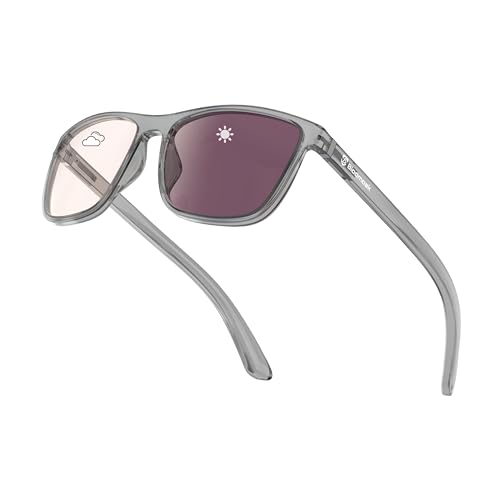
Best for: Mixed indoor/outdoor use where light levels vary. Photochromic lenses darken under UV exposure, providing adaptive protection, with 100% UV protection and blue-light blocking for screen users.
Why selected: The rapid color change and UV protection make them convenient for people who move between indoors and outdoors. Limitation: Car interiors with UV-blocking glass may not trigger darkening, so expect slower darkening in those environments.
BRADDELL FL-41 Rose Tinted Glasses

Best for: People who spend long hours under fluorescent lights and computer screens. The photochromic lenses darken to reduce glare and manage photophobia in dynamic lighting conditions.
Why selected: Focused on minimizing migraine light sensitivity while providing transitional protection. Caution: Some users may prefer a non-photochromic option for consistently bright indoor settings.
Buying Guide: Key Considerations For Photophobia Glasses
- Light spectrum targeting: Look for lenses that filter the 480–520 nm range (blue-green) and relevant secondary bands. This reduces triggers for migraines and photophobia.
- Tint level and color: Rose or pink tints are common for minimal color distortion while providing relief. Photochromic options adapt to UV light for outdoor use.
- Indoor vs outdoor use: If you spend time in both settings, consider a versatile pair with UV protection and light adaptation.
- Comfort and fit: Lightweight frames with flexible materials help wearability for long periods. Check for sizing notes if you have a wide or narrow face.
- Blue-light protection: For screen-heavy tasks, blue-light filtering adds value, especially when combined with FL-41 or related tints.
- Durability and care: Durable frames and scratch-resistant lenses support daily wear. Follow cleaning guidelines to maintain tint integrity.
Frequently Asked Questions
- What makes FL-41 glasses different from regular sunglasses?
– FL-41 glasses use a rose-tinted filter designed to reduce photophobia by targeting specific light wavelengths that trigger migraines and eye strain, rather than merely darkening overall brightness. - Are these glasses suitable for computer work?
– Yes, many options provide blue-light blocking in addition to light-filtering properties, which can reduce eye strain during screen use. - Do these glasses work for all types of migraines?
– They help with light-induced migraine symptoms; efficacy varies by individual, and some may benefit more than others. - Can I wear photophobia glasses indoors all day?
– Several models are designed for daytime wear, offering comfort and UV protection. If tint is too strong indoors, try a lighter option. - Do photochromic lenses darken inside cars?
– Some do not darken inside vehicles with UV-blocking windows; check product notes for vehicle-use behavior. - Is color distortion a concern with rose-tinted lenses?
– Most options minimize color distortion to about 2%, offering a natural appearance while reducing glare.
Buyer-friendly note: The selections above provide varied approaches to light sensitivity relief, from fixed FL-41 tints to adaptive photochromic lenses. Use the Buying Guide questions to align a product with your daily environment, whether you work near screens, navigate bright outdoor spaces, or need consistent protection across different lighting conditions.