The best pivot board for transfers helps people move between seats, beds, and wheelchairs with minimal twisting and strain. This guide highlights five highly relevant options, showing who each is best for, and why they stand out. Ideal buyers include caregivers seeking safer in-home transfers, elderly individuals needing independent movement, and patients recovering from surgery or injury who require gentle, controlled rotation. Below is a quick buying table to compare core details at a glance.
| Product | Diameter | Rotation | Best For | Weight Capacity |
|---|---|---|---|---|
| Sammons Preston 12″ | 12″ | 360° | Smaller spaces, caregivers | 330 lbs |
| Sammons Preston 15″ | 15″ | 360° | Better foot space, moderate rooms | 330 lbs |
| Vive 360° Pivot Disc | ~15.75″ | 360° | General transfers, stroke or elderly | 350 lbs |
| Drive Medical RTL6048 | Unknown | 360° | Caregivers seeking simple rotation | Not specified |
| Etac Turner PRO | Unknown | Rotating pivot, standing assist | Users with upper body strength for standing transfers | 440 lbs |
Note: All products listed are designed to rotate a user rather than lift them. For safer use, ensure correct positioning, footwear, and caregiver guidance as described in each product’s instructions.
Sammons Preston 12″ Pivot Disc

This 12-inch pivot disc offers a 360° rotation, enabling smooth directional changes during transfers. The grooved, non-slip surface helps secure foot placement, which is crucial in tight spaces such as bathrooms, beside beds, or between a chair and wheelchair. It supports up to 330 lbs, making it suitable for many elderly users and caregivers. Its lightweight construction and low-profile design reduce tripping risks and allow flat storage when not in use.
Best for: caregivers who need a compact, reliable solution in small rooms. Better for: transfers between chair to wheelchair or bed to wheelchair when space is limited. Choose this if: you prioritize portability and a solid non-slip surface. Caution: ensure a clear transfer path and proper footwear to maximize grip.
Sammons Preston 15″ Pivot Disc
This larger 15-inch pivot disc increases footing area for safer standing pivots and wider body shifts. Like the 12″ version, it provides 360° rotation and a non-slip surface, with a weight capacity around 330 lbs. It’s well-suited for users who need more room to place feet during transfers, especially in rooms with bend-and-reach constraints.
Best for: households with a bit more space where a wider base improves balance. Better for: transfers that require larger foot placement. Choose this if: you want more stability from a bigger platform. Caution: larger footprint may be less convenient in very small bathrooms.
Vive 360° Pivot Disc
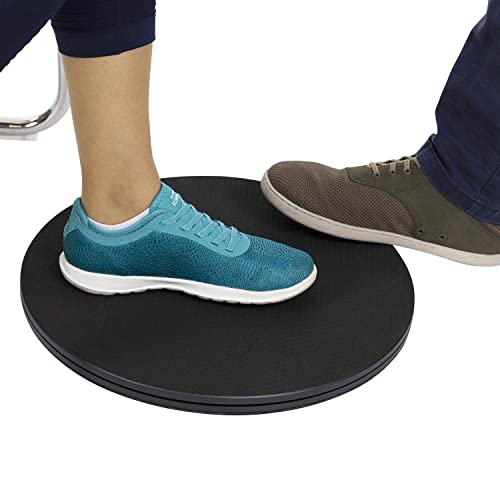
The Vive 360° pivot disc focuses on minimizing twisting during transfers with a nonslip platform that rotates smoothly. It supports up to 350 lbs and is designed to reduce caregiver strain while helping users pivot and turn with less effort. The textured surface adds traction for secure footing across various footwear types.
Best for: those who need strong rotation with high weight capacity and reduced twisting. Better for: bed-to-wheelchair or chair-to-bed transfers where pivoting is central. Choose this if: you value a robust, weight-tavorable platform. Caution: ensure the surface is clean to maintain traction and avoid slips.
Drive Medical RTL6048 Pivot Transfer Disc

This pivot disc helps users move between seats with minimal physical effort, functioning like a rotating Lazy Susan. The top and bottom surfaces are non-slip to enhance safety during transfers. The design supports a straightforward, 360° rotation to reduce the need for twisting, thereby easing caregiver workload.
Best for: caregivers seeking a simple, rotation-focused transfer aid. Better for: straightforward transitions with predictable routes. Choose this if: you want a no-frills option that emphasizes 360° turning. Caution: confirm the product’s weight capacity for your specific user profile, as it’s not always stated clearly in listings.
Etac Turner PRO
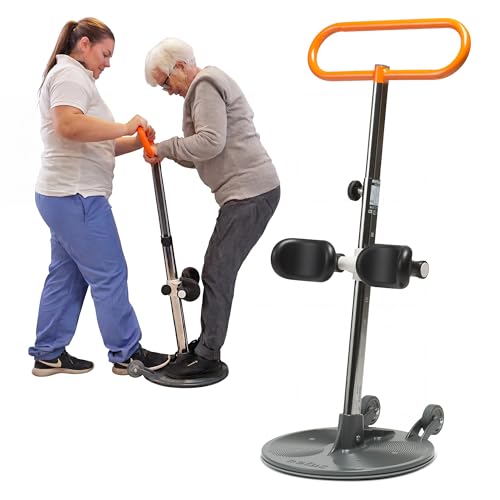
The Etac Turner PRO is designed for safe standing transfers. It provides stable support for moving between seated positions and requires user upper body strength to stand and pivot. It emphasizes upright posture to reduce caregiver strain and promote coordinated, close-proximity transfers. It supports up to 440 lbs, offering strong capacity for heavier users.
Best for: users who can bear weight and follow instructions with caregiver guidance. Better for: transfers from bed to chair, or chair to toilet, where upright stance is feasible. Choose this if: you require a standing pivot aid with strong overall capacity. Caution: this is not a lifting device; user must stand and pivot with guidance.
Buying Guide: How To Choose The Right Pivot Disc For Transfers
What size is right for you?
Pivot discs come in various diameters. Larger discs provide more space for foot placement and can feel more stable, but they require more room. Smaller discs fit tight spaces but offer less stance area. Consider the typical transfer distance and the size of the space (bathroom, bedroom, or living area) when selecting diameter.
How much weight can the disc support?
Weight capacity matters for safety. Look for discs rated to at least 330 lbs when possible. If the user or caregiver anticipates higher loads or dynamic shifts, prioritize discs with higher capacities to reduce risk of slippage or deformation during transfers.
Is 360° rotation necessary?
All five options here offer full 360° rotation, which enables easier direction changes and reduces twisting. If a user can benefit from continuous pivoting in any direction, prioritize a true 360° model. If limited to specific transfer lines, a partial-rotation or guided-turn design could suffice.
What safety features help during transfers?
Non-slip surfaces and textured linings are critical to secure footing. Grooved surfaces improve grip for both feet and wheelchair footrests. Some models also emphasize low-profile designs to minimize tripping hazards and make stacking or storage easier.
Who is the user and who is guiding the transfer?
Etac Turner PRO targets users who can stand with assistance, emphasizing caregiver ergonomics. Other discs emphasize caregiver-friendly rotation and compactness for solo-room navigation. Match a product to the level of user independence and the caregiver’s strength and training requirements.
Maintenance and storage considerations
Look for lightweight, durable materials that are easy to wipe down. Many discs store flat when not in use, which is valuable in small living spaces. Avoid models with fragile surfaces that can degrade with repeated cleaning or exposure to moisture in bathrooms.
Practical usage tips
- Always position feet correctly on the base before starting a rotation.
- Clear a path to prevent tripping hazards during transfers.
- Use footwear with good grip to maximize non-slip performance.
- Ensure the caregiver maintains steady contact and proper guidance throughout the transfer.
Frequently Asked Questions
- Q: Do these discs lift the user or just rotate them? A: They rotate the user; lifting is not the intended function.
- Q: Can I use a pivot disc on carpeted floors? A: Some discs work on hard surfaces; check product specifications for recommended floor types.
- Q: Is a higher weight capacity always better? A: Higher capacity provides more margin for safety, but consider user size and space constraints.
- Q: Are pivot discs suitable for post-surgery transfers? A: They can aid transfers when the user has sufficient strength and caregiver guidance; consult a clinician for individual advice.
- Q: Do these require assembly? A: Most are low-profile, ready-to-use devices, but always verify setup instructions in the product listing.
- Q: Which disc is best for very small bathrooms? A: The smaller diameter options are typically better for tight spaces; consider room layout and door clearances.