Camping with sleep apnea can be comfortable when you bring a reliable portable power source. The following hand-picked options are designed to run CPAP machines, charge multiple devices, and deliver power in rugged outdoor environments. Each product below is evaluated for capacity, recharge options, CPAP compatibility, and overall portability to help you choose the right solution for camping trips, RV stays, or emergency backups.
| Product | Brand | Capacity | Key Benefit |
|---|---|---|---|
| Renogy 76800mAh 276.48Wh | Renogy | 276.48Wh | High 100W USB-C PD and 6-device charging |
| EnginStar Portable Power Station 300W | EnginStar | 296Wh | Two 110V pure sine wave outlets |
| ALLWEI Portable Power Station 300W | ALLWEI | 280Wh | 9 ports, multiple recharge options |
| Medistrom Pilot-24 Lite | Medistrom | 95Wh | Compact CPAP backup power with quick recharge |
| Renogy 72000mAh 266Wh | Renogy | 266Wh | Two USB-C PD ports, CPAP compatibility |
These products vary in size, weight, and output, so consider your CPAP model, how long you need power, and whether you’ll rely on solar charging, car charging, or wall outlets while off the grid. The sections below profile five strong options, focusing on CPAP compatibility, practical recharging methods, and everyday camping usability.
Renogy 76800mAh 276.48Wh Power Bank For CPAP

The Renogy 76800mAh power bank is designed to support CPAP usage in outdoor settings. It features a 100W USB-C PD port plus a car socket for air pumps, GPS, and portable fridges, along with wireless charging up to 15W. With multi-device charging, it can power CPAP machines and several other devices during camping trips. This model emphasizes off-grid capability and quick recharging—up to 3–4 hours with 100W USB-C input—helping maintain sleep therapy without frequent interruptions.
Compatibility notes indicate support for many CPAP machines, including popular ResMed and Philips models, but turning off heater and humidifier can extend runtimes. It ships with multiple CPAP cables and can serve as a reliable backup power source when a wall outlet isn’t nearby. For campers who want a compact, versatile battery with a robust feature set, this Renogy option is a solid choice.
EnginStar Portable Power Station 300W

EnginStar’s 296Wh power station combines portability with power. It offers two 110V pure sine wave AC outlets and multiple DC outputs, making it suitable for CPAP machines, phones, laptops, and cameras. The unit includes a battery management system for voltage and temperature control, supporting a safe charging experience during outdoor use. Lightweight for its capacity, this model is ideal for campers who want reliable AC access for CPAP devices and other essential gear without heavy equipment.
Recharge options include AC charging, car charging, and solar charging (solar panel not included). The device notes emphasize durability and quiet operation, helping ensure sleep therapy continues smoothly in remote locations. If you need dependable AC power and multiple device ports in a compact package, this ENGINSTAR model is worth evaluating.
ALLWEI Portable Power Station 300W
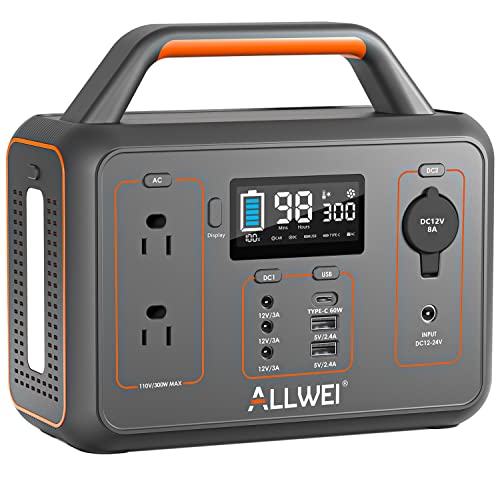
ALLWEI’s solar generator provides 280Wh of capacity with a 300W output. It features multiple recharge methods, including AC wall charging, car charging, and solar panel charging. The unit is designed to power several devices at once via 9 ports, including AC outlets, USB-C PD, and USB-A options. For CPAP users, its multi-port design supports powering CPAP units alongside other camping gear, making it a practical all-in-one power solution for outdoor excursions or emergency backups.
In addition to CPAP compatibility, this model supports power-hungry devices like drones or small RV appliances, offering a balance between capacity and portability. Its built-in safety features help protect connected devices during camping trips, while the solar-ready design supports extended trips with sunny conditions.
Medistrom Pilot-24 Lite Bundled CPAP Backup

Medistrom’s Pilot-24 Lite offers a compact, dedicated CPAP backup power option. The bundle is designed for uninterrupted sleep therapy, delivering quick recharge in 2–3 hours and easy setup for portable use. The unit emphasizes durability with an aluminum casing and high-quality cells, intended to withstand repeated use in outdoor environments. It’s suitable for travelers who want a lightweight, reliable backup power source that specifically targets CPAP devices.
The Pilot-24 Lite focuses on straightforward operation and dependable power delivery. While it doesn’t advertise as a universal multi-device generator, its CPAP-specific reliability makes it a compelling choice for campers seeking a TSA-friendly, travel-ready back-up power option that can keep CPAP therapy running during trips or outages.
Renogy 72000mAh 266Wh Power Bank

This Renogy model features a 60W PD USB-C port for laptops and a second PD port for rapid charging, enabling flexible device recharging on the go. With 266Wh of capacity and a robust battery management system, it supports multiple devices simultaneously. Its CPAP compatibility is highlighted by a dedicated 12V/15A cigarette port with a 150W ceiling for certain CPAP models, though users should verify compatibility with their exact machine. A built-in flashlight adds a practical outdoor utility layer.
Note that this unit does not provide an AC outlet, so it’s best for CPAP setups that can run off DC or dedicated CPAP adapters. For campers prioritizing USB-C PD charging and a compact footprint, this Renogy option can be a strong companion for on-the-go sleep therapy and device charging.
Buying Guide: Key Purchase Considerations
- CPAP compatibility: Verify that the power bank or station supports your CPAP model (some require a CPAP adapter and may not work with all devices).
- Capacity and runtime: Estimate how many hours of CPAP operation you need per night and match capacity (Wh) to expected device power draws, especially heater/humidifier settings.
- Recharge options: Consider 100W+ USB-C PD for fast recharges, car charging for in-vehicle use, wall outlets, and solar charging capabilities for extended trips.
- Port variety: A mix of USB-C PD, USB-A, DC 12V, and occasional AC outlets increases compatibility with CPAP machines and other equipment.
- Portability vs. power: Heavier, higher-capacity units deliver longer runtimes but weigh more. Balance payload with your backpacking or camping style.
- Durability and safety: Look for rugged enclosures, battery management systems, and protection against short circuits, overcharging, and overheating.
- Travel considerations: If you fly, TSA guidelines may affect which devices you can carry onboard; some CPAP backups are designed for TSA-friendly use, while others are not airline-ready.
- Solar readiness: If you plan extended trips, solar-recharge capability can be critical; ensure compatibility with solar panels you own or plan to buy.
- Device charging strategy: Determine whether you need a direct CPAP power path (DC/DC only) or if you can use an AC inverter as part of your setup.
These options help create a flexible camping power kit that keeps CPAP therapy consistent. When selecting, align the product’s output options and recharge methods to your CPAP model, sleep schedule, and typical camping duration to minimize interruptions and maximize comfort during outdoor adventures.