When choosing a pressure point mattress for a hospital bed, the main goal is to protect vulnerable skin and relieve pressure for bedridden patients. The top picks below are designed for long-term use, offer alternating or static support modes, and come with quiet pumps for restful sleep. Best for caregivers seeking hospital-grade relief, best for home use, and best for quiet operation are highlighted in each section.
| Product | Best For | |
|---|---|---|
| Vive Alternating Air Pressure Mattress Pad | Bedridden patients needing continuous pressure relief | 130 air cells with quiet pump |
| Lunderg Alternating Air Pressure Mattress Pad | Caregivers seeking static mode option | Static mode plus quiet pump |
| Vaunn Medical Cloud Air Whisper Quiet Mattress Topper | Patients requiring consistent airflow and circulation | Air lift technology and 130 cells |
| Kekoy 130-Cell Mattress Pad | Early-stage pressure care with 130 cells | Waterproof cover and adjustable pump |
| Careboda Alternating Air Pressure Mattress Pad | Home or hospital bed users needing relief | 10 pressure levels and quiet pump |
Vive Alternating Air Pressure Mattress Pad
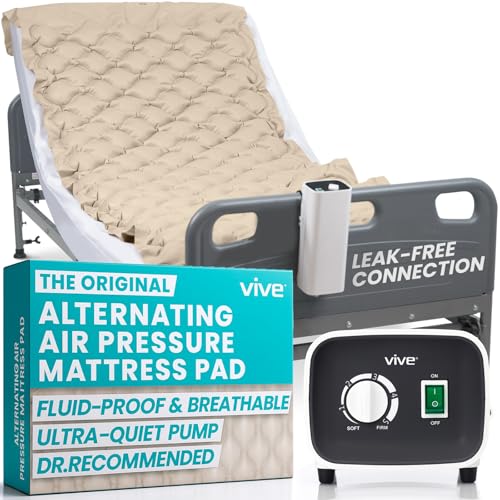
The Vive pad offers doctor-recommended relief for bed sores and ulcers through alternating pressure therapy. It evenly distributes weight across 130 air cells to relieve pressure points and improve circulation for immobilized patients. The whisper-quiet pump operates at about 22 dBA, enabling restful sleep and continuous therapy. Best for bedridden individuals who cannot regularly shift weight and for caregivers seeking consistent relief without noise.
Best for: Bedridden patients needing ongoing pressure relief; caregivers who value a quiet, customizable solution.
Limitation: The data indicates a six-minute cycle with variable pressure; very large beds or unusual frame configurations may require adjustments.
Lunderg Alternating Air Pressure Mattress Pad
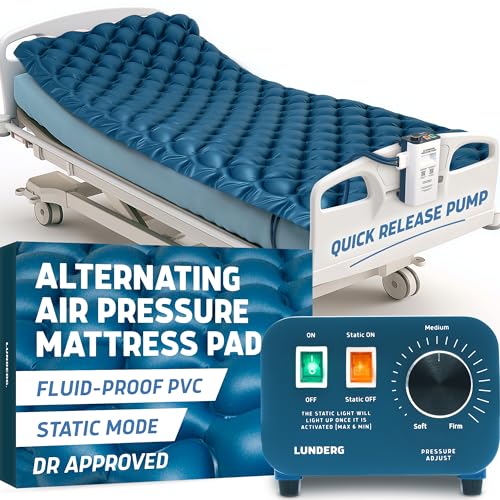
The Lunderg pad is doctor and therapist approved for prevention and healing of bedsores. It provides alternating therapy with a quiet pump (23 dBA) and offers a Static Mode to stabilize the surface for rest. It’s suitable for hospital beds or home use and supports up to 300 lbs, making it a practical choice for long-term care. Best for: Those needing a transition between alternating therapy and static support, and users who require higher weight capacity.
Limitation: Static mode reduces the dynamic relief of alternating therapy, which may be less optimal for ongoing prevention in some patients.
Vaunn Medical Cloud Air Whisper Quiet Mattress Topper

The Vaunn Cloud Topper uses Air Lift Technology to distribute constant airflow, promoting circulation and reducing skin maceration. Its 130 pre-programmed air cells work with an advanced Sleep Wave Therapy cycle to gently inflate and deflate, providing a cool and comfortable surface. It is a strong choice for patients on extended bed rest who need reliable pressure redistribution. Best for: Those needing continuous circulation support and a calm sensory sleep surface.
Limitation: While designed for quiet operation, users should verify compatibility with bed frames to ensure a secure fit in non-standard beds.
Kekoy Alternating Air Pressure Mattress Pad

Kekoy’s pad features 130 air cells and a waterproof cover, designed for bed sore prevention with a whisper-quiet pump. It is suitable for elderly care, bedridden users, and post-surgery recovery. Best for: Early-stage prevention where consistent pressure redistribution helps reduce redness and skin breakdown. Limitation: Waterproof covers can add surface resistance; ensure proper bed frame compatibility for optimal performance.
Careboda Alternating Air Pressure Mattress Pad
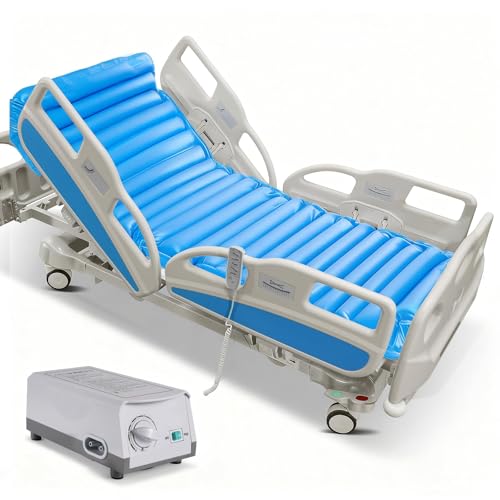
Careboda provides alternating air pressure with a quiet pump and a waterproof mattress topper, designed for both home and hospital beds. It offers 10 customizable pressure levels and features a wave-like motion to improve circulation and reduce turning needs. Best for: Caregivers seeking adjustable, user-friendly control over pressure levels without complicated setup. Limitation: Some users may prefer more aggressive pressure changes for advanced ulcer prevention; this model emphasizes gentle cycling.
Buying Guide
Key considerations when selecting a pressure point mattress for a hospital bed include:
- Pressure redistribution: Choose between alternating therapy, static mode, or a combined approach based on the patient’s skin condition and mobility.
- Noise level: A quieter pump reduces sleep disruption for both patient and caregiver; look for pumps under 25 dBA if possible.
- Cell count and coverage: Higher cell counts (e.g., 130 cells) generally provide more uniform pressure distribution across a larger surface.
- Weight capacity: Ensure the mattress supports the patient’s weight and aligns with hospital bed dimensions.
- Waterproof covers and ease of cleaning: Waterproof, durable covers help protect skin and simplify maintenance in care settings.
- Installation and fit: Confirm the topper or pad fits the bed frame and is easy to secure with straps or hooks.
- Mode versatility: Some models offer Comfort, Static, or Wave modes; assess whether you need a flexible option for changing care needs.
Frequently Asked Questions
- What is a pressure point mattress pad used for in hospital beds?
It redistributes pressure to prevent bed sores and ulcers by alternating inflation and deflation across air cells, improving comfort for bedridden patients.
- Which feature matters most for preventing bed sores?
Effective pressure redistribution across high-risk areas (hips, shoulders, heels) and a quiet, reliable pump for uninterrupted therapy.
- Is static mode useful for care?
Static mode can provide a stable surface for rest, which can be helpful between alternating cycles or for patients who need a gentler surface.
- How important is the number of air cells?
A higher cell count generally offers more uniform support and can reduce pressure points more effectively on larger patients.
- Can these pads be used at home?
Yes. Most models are designed for home use and hospital beds alike, with simple installation and maintenance.
- Do these products require professional setup?
No specialized tools are typically needed; most toppers and pads install with straps or hooks and connect to a standard compatible pump.