Redness relief eye drops offer fast, targeted relief for irritated eyes caused by allergies, computer use, wind, or smoke. This guide highlights five top options, explaining who each product is best for and why it stands out. Whether you want a fast-tacting formula, a hydrating option, or a lower-dose redness reliever, you’ll find a clear, buyer-friendly comparison here.
Quick product snapshot (summary table)
| Product | Best For | Key Benefit | On-the-go/Size |
|---|---|---|---|
| Visine Comfort Redness Reliever | Everyday use, on-the-go | Fast redness relief in 60 seconds | 0.5 fl oz |
| LUMIFY Redness Reliever (0.25 fl oz) | Long-lasting, subtle whitening | Brimonidine-based for selective redness reduction | 0.25 fl oz |
| Visine Red Eye Comfort (Pack of 2) | Multipack for households | Fast 60-second redness relief | 0.5 fl oz per bottle |
| Visine Red Eye Hydrating Comfort Drops | Dryness alongside redness | Moisturizing relief with hydration | 0.5 fl oz |
| Opcon-A Allergy Eye Drops | Allergy sufferers | Antihistamine plus redness relief | 0.5 fl oz (pack of 2) |
Visine Comfort Redness Reliever Drops

Active ingredient: tetrahydrozoline hydrochloride 0.05% helps relieve redness quickly. The bottle is small and portable for on-the-go use. Best for brief, everyday flare-ups from minor irritants like smoke or extended screen time.
Who this is best for: Individuals needing fast, temporary redness relief during the day, especially those who are frequently on screens or in environments with irritants. Why selected: It provides rapid relief within about a minute and is convenient for pocket or purse use. Caution: Do not exceed the recommended dose or use for more than a few days without consulting a clinician, as overuse can lead to rebound redness.
LUMIFY Redness Reliever (0.25 Fl Oz)

Active ingredient: brimonidine, designed to selectively target redness while reducing potential side effects associated with other redness relievers. Works in about 1 minute and lasts up to 8 hours. FDA-approved and free of bleach or dyes.
Who this is best for: People seeking notably whiter-looking eyes with a longer-lasting effect and a formulation that targets redness specifically. Why selected: It’s a doctor-recommended, selective redness reliever with a different mechanism than typical vasoconstrictors. Caution: May cause temporary pupil size changes or mild stinging in some users—consult guidance if you have glaucoma or other eye conditions.
Visine Red Eye Comfort (Pack of 2)

Per-pack details: 0.5 fluid ounce bottles using 0.05% tetrahydrozoline hydrochloride for rapid redness relief within 60 seconds. Designed to tackle redness from minor irritations, sleep deprivation, or extended screen time.
Who this is best for: Households seeking a cost-effective pack for multiple users or frequent travelers who want extra backups. Why selected: The two-bottle option provides dependable supply with consistent performance. Caution: Avoid using more than directed, especially if you have pre-existing eye conditions or take other eye medications.
Visine Red Eye Hydrating Comfort Drops

Key components: 1% polyethylene glycol 400 helps relieve redness and dryness while hydrating the eye surface. Fast-acting, with relief commonly felt within 30 seconds. Hydration supports comfort during windy or dry conditions.
Who this is best for: Individuals who experience dryness alongside redness, such as those in arid environments or with low humidity. Why selected: Combines redness relief with moisturizing ingredients to prevent a dry-afterfeel. Caution: May not be ideal if you require a strictly moisture-free formulation for contact lens wearers unless advised by an eye care professional.
Opcon-A Allergy Eye Drops
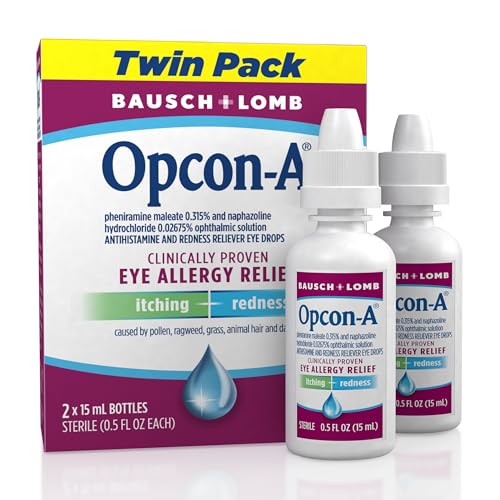
Active combination: antihistamine plus redness reliever to address itchy and red eyes caused by pollen, ragweed, grass, animal dander, and other allergens. Pack of two ensures long-term allergy relief alongside redness control.
Who this is best for: Allergy sufferers who need both itch relief and redness reduction in one product. Why selected: Provides dual action against common ocular allergens while addressing redness. Caution: Can cause morning stinging or irritation for some users; avoid during contact lens wear unless recommended by a clinician.
Buying Guide: Redness Relief Eye Drops — Key Considerations
- Active ingredient and mechanism: Vasoconstrictors like tetrahydrozoline reduce redness quickly but may cause rebound redness with overuse. Brimonidine-based formulas target redness selectively for longer-lasting relief. Antihistamines address itch and redness from allergies.
- Hydration vs. dry eye relief: Hydrating formulas add moisture to the eye surface, helpful for windy or air-conditioned environments. If dry eye is a primary concern, look for drops with glycerin, propylene glycol, or polyethylene glycol.
- On-the-go use and packaging: Smaller bottles are portable for travel or office use but ensure you have enough supply for your typical needs. Pack options can be cost-effective for multiple users.
- Safety and usage: Follow dosing instructions precisely. Do not use products with active ingredients beyond recommended durations or while wearing contact lenses unless specified.
- Allergy considerations: For itchy, red eyes due to allergens, antihistamine-containing drops can provide relief for itching and redness, sometimes with longer-lasting effects.
Frequently Asked Questions
- How quickly do redness relief eye drops work? Most products begin to relieve redness within 30–60 seconds, with noticeable results often in about a minute.
- Can I use redness relief drops every day? Use as directed. Overuse can lead to rebound redness or irritation. If redness persists beyond a few days, consult an eye care professional.
- Are there differences between relief and hydrating drops? Yes. Relief drops focus on reducing redness; hydrating drops emphasize moisture retention to combat dryness.
- Is it safe to use allergy eye drops with redness relief? Some combine antihistamines with redness relief. Check product labels and avoid duplicating active ingredients with other drops.
- Which drop is best for computer-related eye strain? Hydrating and redness-relief formulas can help, but selecting a product with moisturizing properties plus redness relief is usually beneficial for screen-related symptoms.
- Do any redness-relief drops require a prescription? Most popular redness-relief drops sold over the counter are available without a prescription, but always read the label and consult an eye care professional if you have pre-existing conditions.