Recovery from a metatarsal fracture often requires a specialized walking shoe to protect the toes, reduce pressure on the forefoot, and accommodate swelling or bandages. The right post-op or recovery shoe can help you walk more comfortably while your foot heals. This guide highlights five practical options, noting who benefits most from each and potential limitations. Ideal for: active adults needing steady support during recovery, people with swelling, and those seeking protection after bunion or hammertoe procedures.
Product snapshot:
| Product | Best For | Key Benefit |
|---|---|---|
| Men or women needing a adjustable, closed-toe post-op shoe | Roomy square-toe box for swelling; protective design for post-surgery | |
| XL foot sizes with swelling or casts | Similar protection with extra space; suitable for heavier bandaging | |
| Lightweight alternative to a heavy boot | Rigid rocker sole and protective toe box for stress fractures | |
| Both feet; adjustable for right or left | Two adjustable straps for secure fit; keeps dressings dry | |
| Metatarsal fractures with a need to offload forefoot | 15-degree dorsi-angle bottom to shift weight to the heel |
BraceAbility Closed Toe Medical Walking Shoe — M

Best for: individuals with a smaller foot size who need a closed-toe protection during recovery. This unisex design supports the right or left foot, shielding toes, foot, ankle, and leg after surgery or injury. It offers a spacious closed-toe box ideal for swelling and socks or casts. The square-toe shape helps prevent pressure on bandages. Caution: sizing accuracy is important; refer to the size chart to ensure a proper fit.
BraceAbility Closed Toe Medical Walking Shoe — XL
Best for: larger feet or more swelling where extra room is needed. This shoe uses the same protective closed-toe design and adjustable unisex sizing to support post-op recovery. Caution: ensure the XL size is compatible with your dressing length and cast size to avoid rubbing or discomfort.
BraceDirect Post Op Shoe, Broken Toe

Best for: a lightweight, low-profile option when a full CAM boot feels excessive. The rigid rocker sole reduces toe joint movement and supports a natural gait during recovery from fractures or bunion-related procedures. Caution: may be less bulky than traditional post-op boots; consider compatibility with your bandage length and activity level.
Vive Post Op Shoe — Lightweight
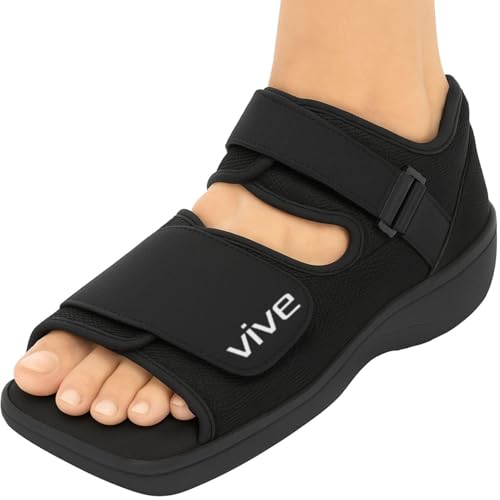
Best for: simple, adjustable protection with two straps to accommodate casts or bandages. It keeps a cast or dressings dry and clean and is suitable for both men and women on either foot. Caution: sizing varies; check the chart to get the right width for a comfortable fit.
BraceAbility Forefoot Offloading Post-Op Shoe — XL

Best for: metatarsal fractures or forefoot surgery where offloading the forefoot is essential. The 15-degree design shifts weight to the heel to reduce pain and promote healing. Caution: this shoe requires careful fit around swelling and dressing thickness; verify sizing before purchase.
Buying Guide
Most buyers need a recovery shoe that protects the forefoot, reduces pressure on the toes, and accommodates bandages or swelling. Consider these factors:
- Sizing and fit: Use the provided charts to select the correct size; swelling can require extra room.
- Toe protection: Closed-toe designs guard dressings and protect surgical sites.
- Offloading capability: For metatarsal fractures, offloading and rocker soles can ease pain during walking.
- Weight and bulk: Lighter options are easier for mobility, but ensure sufficient support for your injury.
- Left vs. right foot: Most models are ambidextrous, but verify if needed.
FAQ
- What is the main purpose of a post-op shoe after a metatarsal fracture?
To protect the toes and forefoot, reduce swelling impact, and allow safe weight-bearing during healing.
- Should I choose a closed-toe or open-toe design?
Closed-toe designs help keep dressings dry and prevent accidental pressure on the toes during recovery.
- Is a rocker sole beneficial for metatarsal fractures?
Yes, a rocker sole can limit toe joint movement and promote a more natural gait, which may ease pain.
- How important is sizing accuracy?
Very important; proper fit reduces rubbing, blister risk, and skin irritation, especially with swelling.
- Can I wear these shoes for longer periods?
They are designed for recovery; if you experience increased pain or swelling, consult a clinician.