Overpronation can lead to knee, hip, and lower back discomfort if not properly addressed. The following shoe inserts are designed to provide arch support, motion control, and guided alignment to help you regain stability during daily activities and exercise. This guide highlights five well-regarded options, each with features tailored for flat feet, low arches, and pronation-related pain. Read on for practical picks and a comprehensive buying guide to help you choose the right insole for your foot type and lifestyle.
Summary table of selected products
| Product | Brand | Key Benefit |
|---|---|---|
| Dr. Scholl’s Stability Support Insoles | Dr. Scholl’s | Improved balance and ankle alignment for flat feet |
| PowerStep Pinnacle Maxx Orthotic Insoles | PowerStep | Maximum stability with motion control |
| PowerStep Pulse Maxx Running Insoles | PowerStep | Firm support with cushioning for running |
| Svowin 3 Layers Adjustable Supination Overpronation Insoles | Svowin | Customizable tilt for pronation correction |
| Dr. Foot 3/4 Orthotics Shoe Insoles | Dr Foot | High arch support in a 3/4 length design |
Dr. Scholl’s Stability Support Insoles

Dr. Scholl’s Stability Support Insoles are designed for those with flat feet and low arches, offering motion control to help maintain ankle alignment and improve overall balance. The stabilizing shell and insole work together to ease pain from the ground up, potentially reducing stress on the knees, hips, and lower back. They are trimmed to fit, making them suitable for many standard shoes. This option is a practical choice for daily wear and everyday activities where stability matters most.
PowerStep Pinnacle Maxx Orthotic Insoles

Pinnacle Maxx insoles provide full-length support with a 2° heel post to enhance motion control and alignment for overpronation. A deep heel cradle and odor-control top fabric offer comfort across long wear, while a firm-but-flexible design supplies immediate stabilization for the foot. These insoles are best suited for shoes that can accommodate a removable factory insole and are ideal for those who need strong arch support and reliable heel stability.
PowerStep Pulse Maxx Running Insoles
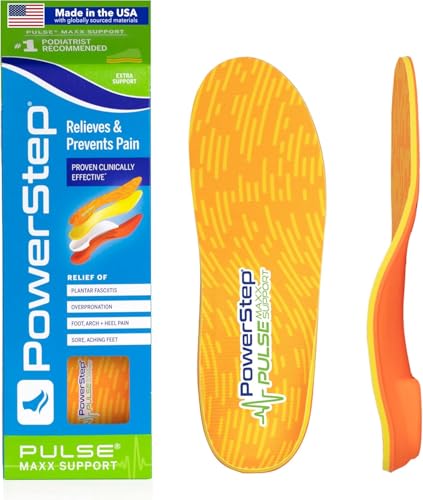
Pulse Maxx insoles are designed for running and athletic use, featuring a more rigid shell for increased support and an angled heel for better correction. They deliver targeted dual-layer cushioning to absorb impact and reduce stress on the feet, ankles, and knees. They are especially helpful for runners dealing with plantar fasciitis, shin splints, and other overpronation-related conditions, providing durable comfort during high-activity sessions.
Svowin 3 Layers Adjustable Supination Overpronation Insoles

Svowin offers a three-layer adjustable design that lets you customize tilt to manage pronation or supination. The anti-slip silica gel honeycomb top layer adds durability and grip, while the three-layer configuration enables you to tailor height and correction. This flexibility makes Svowin suitable for people seeking a modular approach to foot alignment and a solution that can evolve with changing needs.
Dr. Foot 3/4 Orthotics Shoe Insoles

Dr. Foot’s 3/4-length orthotics focus on high arch support, designed to fit a wide range of shoes while leaving room for the toes. Built with a multi-layer composition, these insoles aim to deliver robust arch support, improved alignment, and long-lasting comfort for those dealing with flat feet, plantar fasciitis, or over-pronation. The combination of materials targets cushioning, breathability, and stability in everyday wear.
Buying Guide: Choosing The Right Insole For Overpronation
When selecting an insole for overpronation, consider arch type, shoe type, activity level, and any existing conditions like plantar fasciitis or knee pain. Here are key purchase considerations from multiple perspectives:
- Activity level and use case: If you’re mostly walking or standing, seek insoles with good arch support and a stable heel cup. For runners or athletes, prioritize motion control and a firmer shell to handle impact forces.
- Arch support and heel stability: A deep heel cup and firm arch support help align the foot and reduce inward roll. In some cases, a modular or adjustable layout (as with Svowin or 3/4-length designs) offers customized correction.
- Insole materials and durability: Look for breathable top fabrics, cushioned layers, and shock-absorbing foams or Poron materials to improve comfort and extend wear.
- Fit and shoe compatibility: Ensure the insoles fit your shoe’s size and have a removable factory insole or enough depth to accommodate a thicker insert without crowding.
- Health considerations: If you have plantar fasciitis, Morton’s neuroma, or knee pain, prioritize models with targeted cushioning and proven support for pronation-related symptoms.
- Maintenance and hygiene: Anti-odor fabrics and materials that are washable or easy to clean help maintain foot health during long-term use.
- Price and return policy: For those trying insoles for the first time, choosing a model with a comfortable fit and clear return options reduces risk while evaluating effectiveness.
Summary considerations emphasize stability, arch support, and the balance between cushioning and rigidity. For varied footwear, a modular or 3/4-length option may offer the most adaptable fit, while full-length models often provide sustained support for long days.