Direct answer: for rotator cuff injury, choose a shoulder brace or sling that provides controlled compression, immobilization when needed, and easy adjustability. The listed products offer varying levels of support, from lightweight compression sleeves to full immobilizers with abduction features. Best-suited buyers include active individuals seeking pain relief while staying mobile, and those recovering from surgery or injury who need stabilizing support.
| Product | Brand | Why Chosen |
|---|---|---|
| Komoko Shoulder Brace | Kmeivol | Versatile wrap with adjustable fit; supports rotator cuff and AC joint, durable for repeated washings. |
| Velpeau Arm Sling | Velpeau | T-Shaped design minimizes neck pressure and fits left or right arm; latex- and neoprene-free for sensitive skin. |
| Sparthos Shoulder Brace | Sparthos | Adjustable straps for controlled stabilization; suitable for mild to moderate pain and activity-friendly use. |
| FIGHTECH Rotator Cuff Shoulder Brace | FIGHTECH | Comprehensive support with multiple uses (dislocation, rotator cuff, post-op); adjustable for fit. |
| BraceUP Shoulder Brace | BraceUP | Ice pad pocket for temperature therapy; fully adjustable and comfortable for long wear. |
Komoko Shoulder Brace for Pain Relief
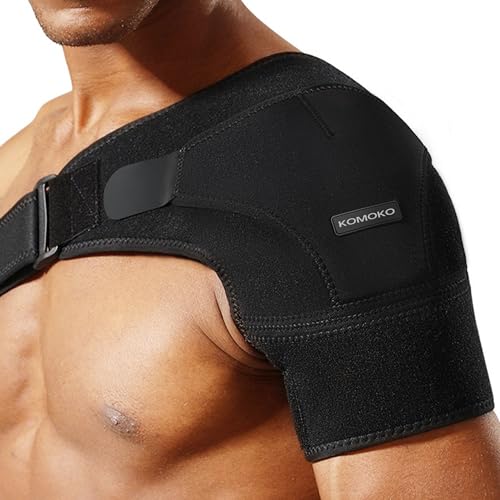
Overview: This neoprene-based brace provides compression to stabilize the shoulder and limit overextension. It claims to accelerate recovery from rotator cuff injuries and AC joint pain while remaining durable through regular washing.
- Best for: users needing stable support during light to moderate activity and rehabilitation exercises.
- Why selected: combination of durability, adjustable fit, and broad support range for both arms.
- Limitation: neoprene materials may irritate sensitive skin in prolonged wear.
Velpeau Arm Sling Shoulder Immobilizer

Overview: A non-neoprene, latex-free sling with a T-shaped design that secures the arm close to the body. Suppresses shoulder movement to aid healing and reduce discomfort.
- Best for: users seeking a low-profile, skin-friendly immobilizer for post-injury stabilization.
- Why selected: avoids neck strangulation and distributes support away from the neck with a comfortable sponge strap.
- Limitation: may limit arm mobility significantly; not ideal for those who need frequent range-of-motion work.
Sparthos Shoulder Brace
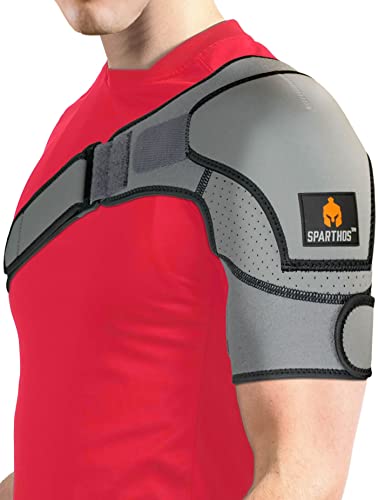
Overview: An adjustable sleeve designed to provide gentle compression while stabilizing the shoulder. Suitable for mild to moderate pain related to rotator cuff issues and AC joint discomfort.
- Best for: active individuals needing stabilization without heavy immobilization.
- Why selected: easy-to-use, adjustable fit with a focus on comfort during movement.
- Limitation: not intended for severe immobilization or heavy lifting with the affected arm.
FIGHTECH Rotator Cuff Shoulder Brace

Overview: This brace targets rotator cuff recovery with multiple applications including as a separated shoulder brace or post-op support. It emphasizes stabilizing pressure in key areas to reduce pain.
- Best for: individuals needing targeted stabilization during daily activities or light training.
- Why selected: versatile design intended to aid recovery and prevent re-injury.
- Limitation: may feel bulky for sleeping or very small frames.
BraceUP Shoulder Brace with Ice Pad Pocket

Overview: This brace combines adjustable support with a removable ice pad pocket for temperature therapy, assisting pain relief and recovery from rotator cuff injuries or general shoulder strain.
- Best for: users who value both compression support and convenient temperature therapy.
- Why selected: flexible sizing and added cooling/healing option without additional equipment.
- Limitation: pocket and pad are not included in all packages, requiring separate purchase if needed.
Buying Guide: How to Choose the Right Shoulder Strap for Rotator Cuff Injury
What level of support do you need? For mild pain or rehab, a compression sleeve or light brace may suffice. For immobilization or recovery from surgery, look for slings or abduction braces that position the arm and limit movement.
Is adjustability important? Yes. Choose products with easy-to-use straps and Velcro closures so you can tailor compression without assistance.
Do you need a skin-friendly option? If you have sensitive skin, select latex- and neoprene-free designs like Velpeau’s sling.
Should you use ice or heat therapy? Some braces include ice pad pockets or are compatible with external therapy tools. Always follow medical guidance on temperature therapy duration.
How does wearing comfort affect wear time? Consider weight, strap distribution, and neck pressure. Look for soft materials and designs that minimize neck strain and allow day-long wear if needed.
What about size and fit? Use provided size charts and measure your forearm, bicep, and torso as instructed. If unsure between two sizes, choose the larger size for comfort and mobility.
Frequently Asked Questions
- Can I wear these braces during exercise? Some braces support light activity; avoid high-impact movements unless advised by a clinician. Look for models that emphasize stability without restricting essential movement.
- Will a sling impede healing? Slings that immobilize the shoulder can aid healing after injury or surgery, but prolonged immobilization may delay rehab. Follow medical guidance on wear duration.
- Are neoprene braces suitable for all skin types? Neoprene can irritate sensitive skin; consider latex-free and non-neoprene options if irritation occurs.
- How do I know if I need a cold therapy pocket? If you experience inflammation or acute pain, a brace with an ice pad pocket can help manage symptoms under medical supervision.
- What should I avoid with these braces? Avoid lifting heavy weights with the injured arm while wearing a brace unless cleared by a healthcare professional.
- Do these braces require professional fitting? Most are adjustable and user-fitted, but if you have severe injuries, seek guidance from a clinician for proper sizing and wear duration.