Looking for effective splints or walking boots to support a broken foot? This guide highlights five reliable options, detailing who each device is best for, how they help, and any limitations to consider. It’s ideal for people recovering from fractures, sprains, or post-operative foot injuries seeking stable, comfortable protection. The top picks emphasize natural walking, adjustable fits, and easy maintenance for different swelling levels.
Buyer snapshot table
| Product | Best For | Key Benefit | Limitations |
|---|---|---|---|
| United Ortho USA14115 Short Air Cam Walker Fracture Boot | Active recovery with rocker sole | Natural gait, shock-absorbing insole | Size-specific fit; check sizing chart |
| Jewlri Air Walking Boot | Swelling variation and ambulation | Removable liner for washing; shock-absorbing | Size varies with swelling |
| BraceAbility Closed Toe Medical Walking Shoe (M) | Post-op or fracture recovery with room for swelling | Closed toe, roomy box for swelling | May not fit very large calves |
| kefit Walking Boot Fracture Boot | Stability for swelling and alignment | Inflatable bag, aluminum brackets for stability | Limited sizing details on data |
| RHINO RESCUE First Aid Splint | Hard splinting for initial stabilization | Adjustable, radiolucent, washable | Not a wear-over shoe; emergency use |
United Ortho USA14115 Short Air Cam Walker Fracture Boot

The United Ortho USA14115 is designed to promote natural walking with a rocker sole and a shock-absorbing insole. This makes it suitable for individuals seeking comfortable ambulation during fracture recovery. The boot is sized to fit Men’s 8-11 and Women’s 9-12, offering a medium option that fits a range of common shoe sizes. A user guide is included to ensure proper application, which helps reduce risk of improper fit and irritation.
- Best for those who want a rocker sole for a more natural stride.
- Better for users who follow a prescribed boot sizing chart to ensure fit.
- Aim to use as directed with the included user guide to promote comfort during wear.
Caution: Do not rely on the boot for stability beyond the intended medical guidance. Ensure correct left/right orientation and proper securement as instructed in the guide.
Jewlri Air Walking Boot, Fracture Boot Short Walker
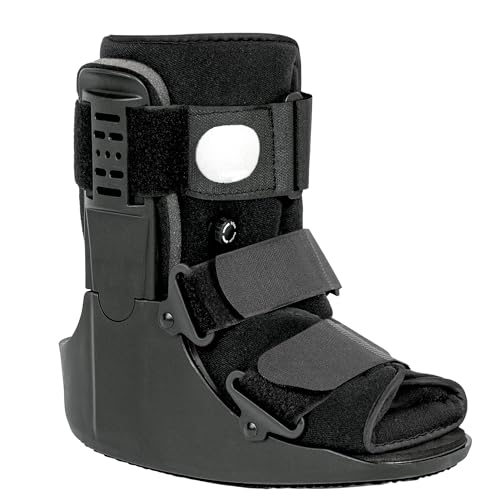
The Jewlri Air Walking Boot offers a compact design with a soft, thick insole and a removable liner for washing. It fits either foot, providing unisex comfort for fractures, sprains, or post-operative recoveries. Condition-specific advice notes that foot swelling can change your size, so measuring the injured foot is recommended before purchase. As a result, this model is best for individuals who anticipate swelling or want a washable liner option.
- Best for users who expect swelling and want a washable liner.
- Better for those who need a versatile left/right fit and a soft insole.
- Choose this if you value a removable liner for hygiene and comfort.
Caution: Consult a medical professional before ordering to ensure the boot matches the injury profile and recovery plan.
BraceAbility Closed Toe Medical Walking Shoe (M)

This closed-toe walking shoe is designed for post-op protection and foot support, with a roomy toe box to accommodate swelling and bandages. It’s suitable for multiple recovery scenarios, including broken toes, metatarsal fractures, and bunion recovery. The unisex sizing ensures a comfortable fit for both men and women, and the shoe is adaptable for either foot. The design helps keep dressings dry and clean, which is beneficial during early healing.
- Best for post-operative protection and swelling accommodation.
- Better for users needing a closed-toe option that shields toes and bandages.
- Choose this if you require a space-saving, adjustable walking boot alternative.
Caution: Ensure accurate sizing via the chart to avoid hindered circulation or ill-fitting protection.
kefit Walking Boot Fracture Boot
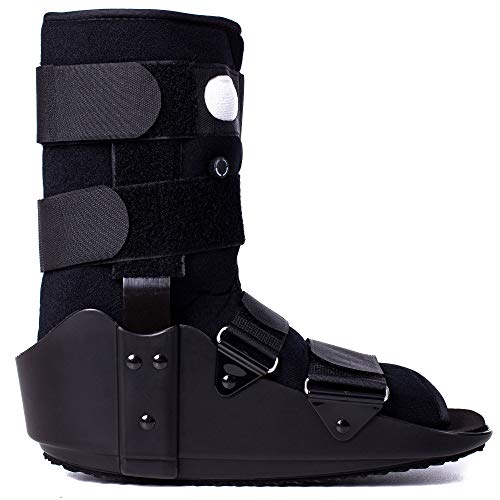
The kefit Walking Boot features an integrated inflatable bag to stabilize the ankle and adjust compression during rehabilitation. Aluminum brackets on both sides provide a fixed support that conforms to leg contours, potentially enhancing alignment and protection during healing. A notable feature is the inflatable compression that can adapt to swelling changes, helping to keep the injured area properly aligned as recovery progresses. The medium size covers typical adult sizes.
- Best for adjustable compression to manage swelling and comfort.
- Better for users who prioritize lateral stability with aluminum brackets.
- Aim to use the inflatable bag to maintain proper alignment during rehab.
Caution: Availability of precise sizing details may require verification; ensure the boot fits comfortably with swelling in mind.
RHINO RESCUE First Aid Splint

The RHINO RESCUE Splint provides strong, lightweight support with aluminum core sandwiched between closed-cell foam. It can be cut to fit various sizes and is radiolucent, allowing X-rays without removal. This splint is suitable for pre- or post-cast care and can be easily remolded or stored when not in use. It’s best used for stabilization in emergency or initial-care scenarios, or as a temporary immobilization aid during transport or early recovery steps.
- Best for temporary stabilization and radiolucent imaging when needed.
- Better for users who require a customizable and reusable splint.
- Avoid this if you need a full walking boot for prolonged ambulation; it is a splint, not a boot.
Caution: It is not a substitute for a full walking boot; consult professional guidance for long-term immobilization and care plan.
Buying Guide: Key Considerations For Choosing A Foot Injury Aids
- Injury type and stage: Is the injury a fracture, post-op recovery, or sprain? Some products provide active walking support, while splints are better for initial immobilization.
- Size and adjustability: Swelling can change foot size; opt for options with adjustable liners, inflatable components, or wide toe boxes to accommodate swelling.
- Fit and orientation: Many models are designed to fit left or right foot; verify sizing charts and consider medical advice for alignment and stability.
- Weight and mobility: Heavier boots may provide more support but can be tiring for long wear; lighter options may promote easier mobility but offer less support.
- Hygiene and maintenance: Removable liners and washable components can improve comfort during extended use and cleansing needs.
- Imaging compatibility: If radiographs are required during treatment, radiolucent designs help imaging without removing the device.
Frequently Asked Questions
- What is the difference between a walking boot and a splint for a broken foot? A walking boot is designed for ongoing ambulation and protection during healing, while a splint provides stabilization and immobilization, often used in initial care or specific injury scenarios.
- How do I determine the right size for a walking boot? Use the manufacturer’s size chart, measure your injured foot and ankle, and consider swelling expectations. Some boots have adjustable liners to accommodate changes.
- Can these devices be worn on either foot? Many models are listed as suitable for left or right feet; verify product descriptions and sizing charts before purchasing.
- Is radiography possible with a walking boot or splint in place? Some radiolucent splints and certain boot designs allow X-rays without removal, but confirm with your medical team.
- When should I replace a walking boot or splint? Replace if there is persistent pain, discomfort, poor fit, or signs of skin irritation; follow medical guidance for replacement timelines.
- Do I need professional evaluation before choosing a boot or splint? Yes. A healthcare professional can recommend the appropriate injury device based on fracture location, swelling, skin condition, and healing stage.