If you’re searching for stair lifts designed to handle basement stairs, you want options that fit straight run staircases, offer solid weight capacity, and install without major renovations. This guide highlights five top picks suited for basement access, explaining who each product is best for and why it stands out. The selection ranges from DIY-friendly straight stair lifts to compact, adaptable models, helping you choose the right match for your basement layout and daily needs.
Below is a quick comparison of the featured products to help you decide at a glance:
| Product | Best For | Key Strength | Notes |
|---|---|---|---|
| AmeriGlide Rave 2 Stair Lift | DIY installers and tight basements | Battery-powered, 350 lb capacity | Self-installable; fits most straight staircases |
| Universal Stair Lift | Flat-to-wall space-saving basements | 350 lb capacity, folds flat | Made in America; warranty; versatile mounting |
| Stair Assist Cane (Black) – ELDERACARE | Very narrow or shallow basement stairs | 300 lbs, adjustable height/width | Non-seating aid; best for minimal changes |
| 20-Level Adjustable Stair Climbing Assist Cane – SAMTROY | Flexible, portable basement access | 20 height positions, no installation | Requires wall-mounted rail for best stability |
| Electric Stair Climbing Wheelchair – Yawhew | Very heavy users or multi-level basements | 450 lb capacity, powered ascent | Mobile chair-style alternative to fixed lift |
AmeriGlide Rave 2 Stair Lift for Seniors

The AmeriGlide Rave 2 is a straight-stair lift designed for basement access with ease of installation. It operates on battery power, making it practical where outlets or wiring are limited. It includes 15 feet of track and supports up to 350 pounds. This model is best for DIY installers who want a straightforward installation on typical straight basement stairs and who value a reliable, self-contained power source.
Best for: Homeowners who prefer a self-install approach and need dependable performance on straight basement stairs. The battery backup can be a major advantage during power outages. A practical choice for those who want to avoid extensive electrical work.
Limitation: As with many DIY installs, longer or irregular basement stairs may require professional assessment to ensure secure mounting and optimal balance. Always verify stair width and rail mounting clearance before purchase.
Universal Stair Lift
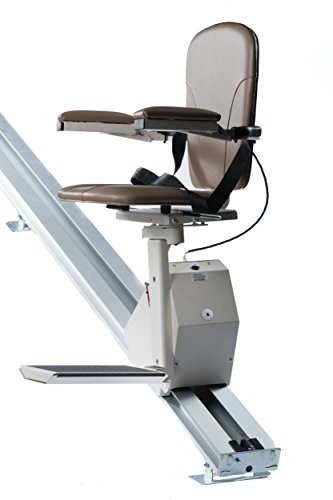
The Universal Stair Lift emphasizes space efficiency with a fold-flat-to-wall design and a 350 lb capacity. It installs on either side of straight stairs and comes with 15 feet of track, a practical length for many basement configurations. It includes multiple safety mechanisms and a wireless remote to control stair movement from a distance.
Best for: Basements with limited floor space where a compact, left- or right-side installation is desirable. The fold-flat feature helps keep the stairs accessible for everyday use when the lift is not needed.
Caution: Ensure there is adequate wall clearance for folding the unit flat and verify that your staircase width accommodates the mounting hardware on both sides.
20-Level Adjustable Stair Climbing Assist Cane – HeywoodCabin
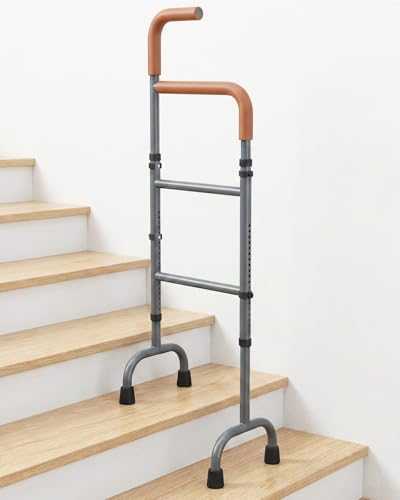
This stair climbing assist cane offers 20 height adjustment points and a robust 300 lb capacity. It is designed as a portable, non-permanent aid for stairs and can be a helpful companion to a basement transition where permanent lifting equipment isn’t feasible. The product emphasizes dual stability with anti-slip foam grip and non-slip feet, plus a straightforward setup without drilling.
Best for: Basements where a portable, non-permanent aid is preferred or where stairs are irregular and a traditional lift isn’t feasible. Ideal as a supplemental stability tool for brief or occasional basement trips.
Limitation: It is not a powered lift; for long or steep basement stairs, it may require extra balance support and should be used alongside a fixed handrail.
Stair Assist Cane, Standing Stair Lift – ELDERACARE

The ELDERACARE stair assist cane offers adjustable width and height with a 300 lb limit, emphasizing a comfortable, anti-slip experience and a widened base. It includes a lighting feature to improve visibility in dim basement stairwells. This model is best for users who need a lightweight, portable aid with enhanced stability and a few safety extras.
Best for: People who want an adjustable, easy-to-store aid that can adapt to different basement stair dimensions and lighting conditions. Choose this if you need a lightweight option with additional safety features.
Limitation: Not a full stair lift—it provides steady support but requires the user to bear some weight and balance while climbing stairs.
Electric Stair Climbing Wheelchair – Yawhew
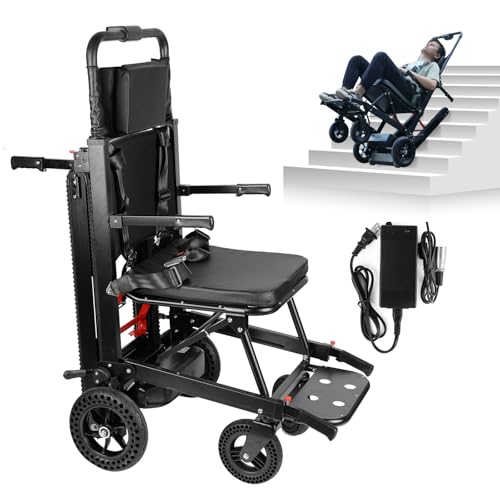
The Yawhew electric stair climbing wheelchair offers a 450 lb capacity and powered ascent, presenting an option for heavier users who need a mobile solution rather than a fixed straight-lift installation. It is a practical alternative for basements where a traditional stair lift would require significant modifications, or when mobility is needed across multiple levels without site-specific installation.
Best for: Heavy users or households needing a flexible, mobile solution over a fixed installation. Choose this when you want to move between floors with a powered assist rather than a single-track lift.
Caution: This unit is a chair-style mobility solution; assess whether you need a dedicated stair lift with track for your basement stairs or if this mobile chair meets your access needs on a regular basis.
Buying Guide: How To Choose The Right Stair Lift For Basement Stairs
Work through these practical questions to tailor your choice to basement stairs and daily living constraints.
- What is my staircase configuration? If it’s a straight run, a dedicated straight stair lift like the AmeriGlide Rave 2 or Universal Stair Lift can work well. If your stair has turns or is unusually narrow, consider alternative aids or consult a professional for specialized installation.
- What is the weight requirement? For heavier users, models with a 350 lb or higher capacity—like the Universal Stair Lift and AmeriGlide Rave 2—offer more confidence and longer service life.
- Do I prefer a DIY install or professional help? DIY-friendly models save installation time and cost but may require careful measurement and mounting. For complex basements, a professional assessment can prevent mounting issues.
- Is power reliability important? Battery-powered options guard against outages, ensuring continued access to the basement even during a outage, while corded or plug-in systems may rely more on wall outlets.
- How much space does the stair and landing provide? If space is tight, a fold-flat-to-wall design helps keep stairs accessible when the lift is not in use, as seen in the Universal Stair Lift.
- Will the solution be used daily or occasionally? For frequent use, a sturdy lift with clear safety features and a reliable remote control reduces friction in daily routines.
Frequently Asked Questions
- What is a basement stair lift best suited for? A straight stair lift designed for basement access provides safe, reliable vertical movement between levels without major home renovations.
- Do stair lifts require professional installation? Some models are DIY-installable, but others may require professional mounting, especially on uneven or wide staircases.
- What safety features should I look for? Look for seat belts, safety interlocks, anti-slip surfaces, and a reliable remote or control panel for convenient operation.
- Can stair lifts be installed on either side of stairs? Some models support mounting on either side of straight stairs, offering flexibility for room layout and furniture placement.
- Are portable stair aids sufficient for basement access? Portable aids like climbing canes or stair chairs offer supplemental support but do not replace a dedicated stair lift for regular, full-time use.
- What maintenance is required? Regular checks of track alignment, battery health, and locking mechanisms help ensure smooth operation and safety.