Finding a reliable standing lift for stairs can improve mobility and reduce the risk of falls for seniors and caregivers alike. This guide compares five highly capable products designed to assist getting up, down, and around stairs with stability, comfort, and safety. Each option offers unique features to fit different homes and needs.
Summary of chosen products:
| Product | Brand | Key Benefit | Capacity |
|---|---|---|---|
| Retaoldth Stair Assist Cane | Retaoldth | Adjustable height; sturdy aluminum stand aid | Not specified |
| Stair Climbing Assist Cane | Helivora | Ergonomic grip; dual stability pads | Not specified |
| Stair Climbing Assist Cane & Elderly Stair Lift | HeywoodCabin | Lightweight carbon steel; wobble reduction | Up to 300 lbs |
| AmeriGlide Rave 2 Stair Lift | AmeriGlide | Self-installable; 350 lb capacity | 350 lbs |
| VOCIC Upgrade Sit to Stand Lift | VOCIC | One-step stand assist; easy navigation | 300 lbs |
Retaoldth Stair Assist Cane

The Retaoldth Stair Assist Cane combines durability and portability with a U-shaped wide base and Y-shaped support legs to distribute pressure evenly. Constructed from aluminum, the device emphasizes anti-rust properties for longer service life. It offers four height settings within a range of 33.85 to 37 inches, enabling users to choose different grip heights for varied stairs and seating situations. Quick installation allows two-step assembly and flexible left/right placement, making it convenient for everyday use around beds, couches, and chairs as a stand-up aid.
Key features include strong and stable construction, adjustable height for diverse users, and straightforward setup. This model is suitable for users who need a lightweight, non-intrusive assistive device to help rise from low surfaces and negotiate short flights of stairs.
Stair Climbing Assist Cane

Helivora’s Stair Climbing Assist Cane focuses on ergonomic design and stability. It is designed to ease hip and knee discomfort during stair navigation, with a soft, non-slip foam grip to reduce hand fatigue. The base features four foot pads and anti-slip rubber tips to provide dual stability on various surfaces, aiming to prevent slips. Constructed with anodized aluminum, it resists rust and corrosion while maintaining portability. The design prioritizes reliable grip, making each step safer and less painful for users who require steady support while ascending or descending stairs.
Stair Climbing Assist Cane & Elderly Stair Lift

HeywoodCabin’s model emphasizes dual stability with a lightweight carbon steel frame and anti-rust coating. It features an anti-slip, ergonomic foam handle to minimize hand fatigue and four non-slip rubber feet that adapt to various stair materials. A notable design note is the white plastic plug that reduces wobble by filling the gap between smaller and larger tubes, which helps stabilize the device during use. This option balances portability with robust support for users up to 300 pounds, offering dependable assistance on a range of stairs.
AmeriGlide Rave 2 Stair Lift
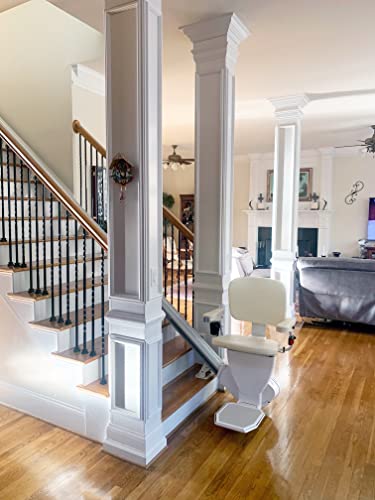
The AmeriGlide Rave 2 Stair Lift is a self-installable option designed for straightforward setup. It supports up to 350 pounds and includes 15 feet of track. This model is geared toward home installations where a motorized assist can provide consistent support along longer staircases, reducing the effort required to ascend or descend. The system emphasizes simplicity of installation and a higher capacity for users who require a more comprehensive lift solution in a single device.
VOCIC Upgrade Sit To Stand Lift

VOCIC’s Upgrade Sit To Stand Lift uses a one-step seat rotation to simplify caregiver adjustments, enabling direction changes during transfer without multiple steps. It places support points at the patella and tibia for improved patient security and maintains a narrow build to navigate through standard doorways easily. With a 300-pound capacity and an upgraded wheel-locking system, it aims to provide stable, wobble-free transfers in home care settings and clinics, making standing and transferring safer for both patient and caregiver.
Buying Guide
- Weight capacity: Choose a model rated to support the user’s weight plus a safety margin. Heavier users require sturdier frames and wider bases.
- Stability and base design: Look for non-slip feet, anti-wobble features, and a stable base that distributes pressure across stairs and landings.
- Adjustability: Prefer devices with adjustable height or multiple grip heights to accommodate different stair types and user heights.
- Portability vs. permanence: Consider whether you need a lightweight unit for flexibility or a more permanent, motorized lift for frequent stair use.
- Ease of installation: Self-install models should have clear instructions and straightforward steps; professional installation may be needed for some stair configurations.
- Grip comfort: Ergonomic handles with cushioning reduce hand fatigue, especially for users with limited grip strength.
- Materials and durability: Aluminum frames offer light weight and corrosion resistance; steel frames provide higher rigidity and load capacity.
- Safety features: Look for locking mechanisms, anti-slip surfaces, and potential fall-prevention designs to minimize risk during transfers.
- Maintenance: Check for rust resistance, ease of cleaning, and availability of replacement parts or accessories.
- Usage scenarios: Consider single-family homes, multi-story layouts, or assisted living environments to pick the most suitable design.