When looking for a talking clock for an elderly loved one, the main goal is clear, audible time and date announcements, simple operation, and reminders that support everyday routines. This guide reviews five top options suited for dementia, Alzheimer’s, or visual/hearing impairment, highlighting who each clock is best for, why it stands out, and any practical limitations. The selections balance large displays, straightforward controls, and multiple reminders to help seniors stay organized and safe at home.
Summary at a glance:
| Product | Best For | Key Benefit | Notable Limitation |
|---|---|---|---|
| Mitoart Digital Alarm Clock | Seniors needing voice time and multiple alarms | 7-inch display; 9-language voice time | Remote control required for some features |
| MASSII 27 Alarms Clock | Caregivers needing many reminders | 20+ reminders; dual control via remote | HD display may be heavy for some users |
| Cirbic Extra Large Talking Clock | Very low-vision users | Extra large button; high-contrast display | Fewer advanced reminder options |
| Top Life Extra Loud Talking Clock | Hard-of-hearing users | 85 dB volume; simple one-button operation | Limited display features |
| GOLOZA 7” Digital Dementia Clock | Users needing many reminders and color display | 10 color modes; 20 alarms; 3 pill reminders | Some users may find settings complex |
Mitoart Digital Alarm Clock With Date And Day Of Week

The Mitoart clock emphasizes a large 7-inch display, showing week, month, and date in bold letters for easy reading. It includes a voice timing function with nine language options and a simple OK or remote control to announce the current time. Multiple alarms and reminders support daily routines, medications, or events, making this clock suitable for dementia and memory-impaired users. Best for seniors who benefit from spoken time and straightforward alarm management. A potential drawback is reliance on the remote for some voice features, which may be less convenient if the remote is misplaced.
MASSII 27 Alarms Digital Talking Clock

The MASSII clock provides an upgraded HD display with time, weekday, and date, plus real-time voice announcements. It supports 20+ reminders and 27 total alarm capabilities, including medication prompts and water reminders, with a remote for ease of use. It suits dementia patients and caregivers seeking robust reminder functionality. Better for environments where wall or desk placement is flexible. A caution: the richer feature set may require a learning curve for first-time users.
Cirbic Extra Large Talking Button Clock

The Cirbic clock features an extra-large button with high-contrast visuals to hear the current time, and the date on a second press. It includes alarm functionality and offers two voice settings (high/low). This model is ideal for users with severe visual impairment who need tactile simplicity. It is less feature-rich on reminders and scheduling compared with multi-alarm models, so choose this if straightforward time/date access is the priority.
Top Life Talking Clock — Extra Loud
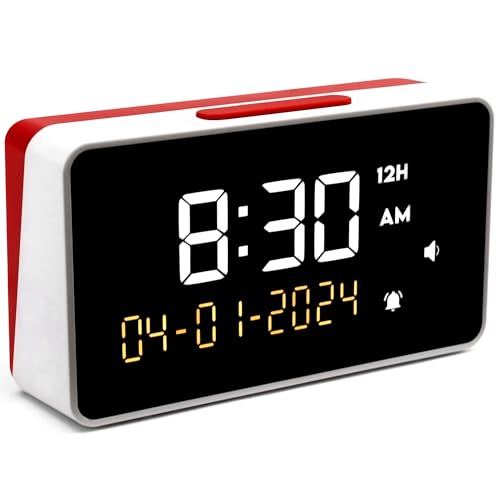
The Top Life clock offers a clear, loud output (up to 85 dB) and a simple top-button interface to announce time, then the day and date. It is highly suitable for users with hearing challenges, as well as those who need a quick, one-button interaction. Best for bedside or living-room placement where voice output needs to be audible. A limitation is that its display functions are basic compared to some other models with multiple reminders or calendar features.
GOLOZA 7” Digital Dementia Clock

The GOLOZA clock combines a 7-inch display with 10 talking volumes and 6 display options plus color modes, auto-dimming, and a broad reminder system, including birthdays, holidays, and 3 pill reminders. It is well-suited for seniors who want a highly customizable experience and a vivid color display to reduce confusion. However, its comprehensive feature set may require more setup time and careful navigation for first-time users.
Buying Guide
What features matter most for elderly users?
- Display size and readability: Larger displays with high contrast help those with limited vision.
- Voice and language options: Multilingual or clear American English voices reduce confusion and aid comprehension.
- Reminders and alarms: The ability to set multiple alarms and reminders supports medication and daily routines.
- Ease of use: Simple controls, one-button operation, and intuitive menus reduce frustration.
- Power and installation: Battery backup, wall-mount vs. desk placement, and compatibility with household power are considerations.
What layout best serves different needs?
- Best for dementia or memory challenges: Clocks with easy-to-press buttons, one-button audio, and clear time/date announcements.
- Best for hearing-impaired users: Higher volume options and pronounced voice outputs.
- Best for caregivers: Models with 20+ reminders or remote control for easy updates from afar.
- Best for visually impaired: Extra-large displays and high-contrast color schemes.
How to choose between models?
- Consider the daily routine: If medication reminders are essential, prioritize clocks with multiple reminders and customizable schedules.
- Placement flexibility: Determine whether a desk clock or wall-mounted option fits the room layout.
- Maintenance and durability: Look for models with straightforward power options and reliable physical buttons.
Frequently Asked Questions
- What is the primary benefit of a talking clock for seniors?
They provide audible time and date, reducing confusion for those with vision or memory challenges. - How many alarms should I look for in a good dementia clock?
A model with 10–20 alarms and reminders is typically suitable for daily routines and medications. - Are these clocks easy to set up?
Most are designed for simple setup, but some may require more time to configure reminders and voices. - Can these clocks help with late-day confusion?
Yes, by keeping consistent time cues and reminders, they can support routines and reduce anxiety. - What should I consider for a visually impaired user?
Choose models with extra-large displays, high contrast, and loud, clear voice outputs. - Do these clocks require ongoing maintenance?
Typically minimal; ensure power supply is stable and batteries or remotes (if used) are accessible.