Tilting wheelchairs offer a balance of recline comfort and stability, making them a smart choice for seniors who need adjustable positioning, easier transfers, or improved pressure relief. This guide highlights five practical options best suited for distinct needs—whether you value portability, caregiver-friendly features, or enhanced safety. Each product section explains who it’s best for, why it stands out, and a cautious note to consider before buying.
The following quick-reference table summarizes the five selected products, helping you compare at a glance before diving into detailed sections.
| Product | Best For | Key Benefit |
|---|---|---|
| WEYRAL Super Lightweight Reclining Travel Wheelchair | Travelers and caregivers seeking stylish, recline-capable mobility | 165-degree recline with anti-tip design for safety |
| Drive Medical Lightweight Expedition Folding Transport Wheelchair | Caregivers needing easy transport and curb navigation | 12″ rear wheels and loop lock brakes for confident operation |
| Medorol Lightweight Transport Wheelchair | Users requiring high weight capacity without heavy frame | 300 lb capacity with lightweight aluminum frame |
| Yawhew Electric Stair Climbing Wheelchair | Home environments with stairs; independence on multiple levels | 450 lb capacity with powered stair climbing |
| JIADEXIN Wheelchair Harness | Active prevention of leaning or forward sliding | Adjustable full-body support to improve upright posture |
WEYRAL Super Lightweight Reclining Travel Wheelchair

Best For: Seniors who travel and want flexibility in seating position. Why selected: This wheelchair features a recline range from 90 to 165 degrees and anti-tippers to prevent tipping when reclining or crossing curbs. The carbon fiber transfer process enhances style while maintaining a sturdy aluminum frame, and the padded back support plus detachable cushions simplify cleaning and maintenance. Caution: The weight limit is 220 lbs, so heavier users should verify compatibility before purchase.
Drive Medical Lightweight Expedition Folding Transport Wheelchair

Best For: Caregivers needing a portable option with reliable braking and predictable handling. Why selected: It offers a lightweight design with padded armrests and fold-down footrests, large 12-inch rear wheels for smoother rides over bumps, and user-friendly brakes for stable stopping without bending. Caution: Rear-wheel brakes are compagnon-activated; ensure the user can operate the brakes comfortably.
Medorol Lightweight Transport Wheelchair

Best For: Users needing higher weight capacity without sacrificing maneuverability. Why selected: This chair combines a high strength aluminum frame with a 300 lb capacity while maintaining light weight for easier transport. The seat uses a blend of durable materials to reduce fatigue, and hand brakes give independent stopping capability. Caution: Read assembly and maintenance instructions to ensure safe folding during transport.
Yawhew Electric Stair Climbing Wheelchair
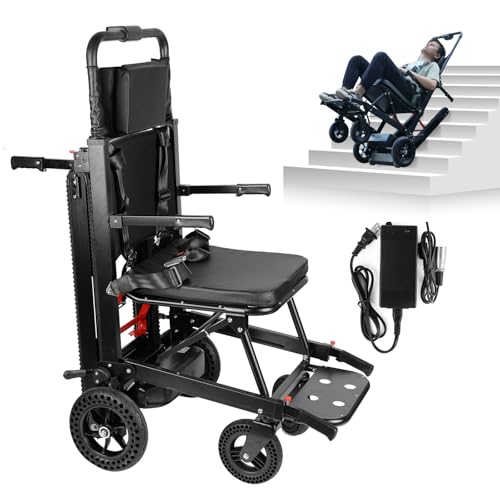
Best For: Seniors living in multi-level homes who want safer stair access without a fixed stair lift install. Why selected: This model provides powered stair climbing up to multiple levels with a strong 450 lb load capacity and built-in safety belt. It’s designed to be used indoors and outdoors and reduces the caregiver’s lifting strain. Caution: Power-operated stair climbers require careful monitoring for battery life and charging needs in daily use.
JIADEXIN Wheelchair Harness

Best For: Users needing extra torso support to maintain upright posture. Why selected: The adjustable full-body harness provides secure upper body support and helps prevent lean or forward sliding. Made with breathable mesh and strong nylon straps, it’s designed to fit a range of body shapes. Caution: Ensure proper fit to avoid discomfort or restricted movement during prolonged use.
Buying Guide: Key Considerations For Tilting Wheelchairs
Positioning range and stability: Prefer models offering adjustable recline or tilt as needed for comfort, pressure relief, and safer transfers. Look for anti-tip features and sturdy frames to minimize tipping risk when changing position.
Weight capacity and portability
Consider the user’s weight and daily mobility needs. Lightweight aluminum frames improve maneuverability, but higher weight ratings are essential for heavier users or long-term use. Check folding options for travel or storage.
Wheel size and braking
Rear wheels are critical for smooth navigation and stability. Larger rear wheels handle curbs better, while reliable brakes (including caregiver-assisted or user-operated) reduce the risk of unintended movement. Ensure brakes are easy to reach and operate.
Comfort and support features
Look for padded seating and back cushions, easily detachable for cleaning. Integrated safety belts, torso supports, and optional harnesses help manage posture and prevent forward leaning. Verify compatibility with cushions or extra padding you may already own.
Transfer and maintenance considerations
Consider how easy it is to transfer from bed to chair or car to chair. Detachable cushions and simple cleaning options reduce maintenance time. Regular checks on locks, leg rest folds, and frame integrity help ensure safety over time.
Suggested buying questions
- Do you need a chair that reclines or tilts for pressure relief?
- Is a higher weight capacity essential for the user?
- Will the chair be used primarily at home or for travel?
- How important is independent braking versus caregiver assistance?
- Do you need additional torso support or anti-lean features?
FAQ
- What is a tilting wheelchair and who benefits most?
Answer: A tilting or reclining wheelchair allows the seat to adjust angle for comfort, pressure relief, and posture; it’s especially beneficial for seniors who need variable seating after prolonged use or who require easier alignment during transfers. - Are tilting wheelchairs safe to use on stairs or uneven surfaces?
Answer: Safety depends on design. Wheelchairs with anti-tip features and sturdy frames reduce tipping risk on slopes or uneven surfaces. For stairs, powered stair climbers or transport chairs with appropriate wheels are preferable to standard tilting chairs. - What weight capacity should I look for?
Answer: Match capacity to the user’s weight, plus a safety margin. Models shown here range from 220 lbs to 450 lbs, with higher capacities often offering more stability on uneven terrains. - Can these chairs be customized with accessories?
Answer: Yes. Many options support detachable cushions, harnesses, or torso supports. Verify compatibility with your cushion size and secure attachment methods. - How do I maintain a tilting wheelchair?
Answer: Regularly inspect brakes, locking mechanisms, and folding joints. Clean cushions as needed and replace worn components to preserve safety and comfort. - What should I consider when choosing between a reclining chair and a stair-climbing chair?
Answer: Reclining chairs prioritize comfort and pressure relief, while stair-climbing chairs emphasize vertical mobility inside multi-level homes. Choose based on daily routing and home layout.