Find the right trigger point release tools to target knots, fascia, and deep tissue tension. This guide highlights five popular options, showing who they’re best for and why they stand out. Ideal buyers include athletes seeking post-workout recovery, everyday desk workers battling neck and shoulder stiffness, and anyone pursuing self-myofascial release at home. The table below summarizes the five selected products to help you compare quickly.
| Product | Best For | Key Benefit | Limitations |
|---|---|---|---|
| Rena Chris Trigger Point Massage Tool & Muscle Scraper Tool | Deep knots, fascia release | 2-in-1 kit with triangle and S-shaped scraper for full-body reach | Stainless steel may be slippery when hands are sweaty |
| Manual Trigger Point Massage Tool (SIMPLECOOL) | Beginner to intermediate self-massage | Ergonomic pyramid with 4 massaging points | Small size may limit leverage for larger muscle groups |
| hautllaif Manual Trigger Point Massage Tool Set | Compact at-home therapy | 4-legged knobs and thumb saver for versatile use | Plastic construction; may wear with heavy use |
| lifechill Trigger Point Massage Tool | Versatile, all-in-one tool | Dual-tip with large and small heads for different depths | All-metal design can feel cold without use of heat |
| Acupuncture Pen by wellgler | Targeted point relief, facial therapy | Stainless steel, two head sizes for precision | Smaller head may be less effective on large muscle groups |
Rena Chris Trigger Point Massage Tool & Muscle Scraper Tool
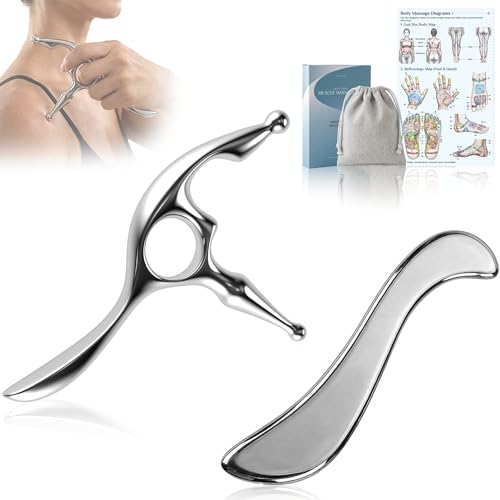
The 2-in-1 kit includes a triangle tool for precise, thumb-saving relief and an S-shaped scraper that reaches hard-to-access spots. The triangle tool is designed to fit the palm, allowing targeted acupressure on feet, palms, and shoulders without finger strain. The hooked edge of the S-shaped scraper handles knees, neck, waist, and arms, helping with tech neck and desk-related stiffness.
Best for: users who want a comprehensive, dual-tool approach to trigger point and fascia relief, with a focus on comfort and joint protection. Choose this if you need both deep knot work and broad-area scraping in one setup. Caution: ensure a steady grip to avoid slipping on slick skin or oil.
Manual Trigger Point Massage Tool (SIMPLECOOL)

This compact pyramid-shaped massager features four small points to apply focused pressure on trigger points, deep fascia, and muscle knots. It is designed for quick relief and easy use at the desk or on the go. Its small footprint makes it especially useful for hands, wrists, feet, and calves.
Best for: beginners and anyone seeking a straightforward tool for precise point work or foot massage. It’s a strong choice for those who want portable, all-around therapy without complex setups. Caution: limited leverage for very large muscle groups; consider pairing with a larger tool for full-body sessions.
hautllaif Manual Trigger Point Massage Tool Set

The set includes a green thumb protector, a palm-urchin massage tool, and four-legged massage knobs. The four-legged knobs offer stable leverage, while the thumb protector helps reduce finger strain during longer sessions. The tools are designed for ease of use on the back, neck, arms, thighs, and calves.
Best for: at-home users who want a versatile, multi-tool kit for self-massage across multiple body areas. Limitations: the plastic construction may wear with heavy use; inspect for cracks after intensive sessions.
lifechill Trigger Point Massage Tool

This all-in-one tool blends trigger point work with gua sha and lymphatic drainage. The dual-tip design offers a larger head for broad muscle groups and a smaller one for deep tissue work. Its serrated edge helps mimic manual lymphatic techniques to reduce inflammation and improve blood flow.
Best for: users who want a single device capable of multiple massage modalities, including fascia release and lymphatic work. Caution: metal construction can feel cold—use a warm hand or light oil to enhance comfort during use.
Acupuncture Pen by wellgler

This stainless steel acupuncture pen focuses on precise trigger points with two head sizes for adaptive pressure. Sliding and pressing motions enable targeted therapy for tension headaches, neck, shoulders, and facial areas. It’s compact and durable, suitable for focused point relief on the go.
Best for: individuals seeking precision in trigger point work, especially in facial areas or small muscle groups. Limitations: not ideal for large muscle regions where a bigger head or different tool could be more efficient.
Ranarose Deep Tissue Back & Neck Massager

The two-sided cane design enables deep tissue work across the entire body from head to toe. It features eight massage nodes to target diverse muscle spasms and knots. The lightweight build makes it easy to maneuver for self-massage and targeted trigger point relief in the back, neck, shoulders, and legs.
Best for: those who want a full-body trigger point tool with adjustable pressure and broad coverage. Choose this if you need leverage for larger muscle groups and sustained pressure. Caution: may require some practice to locate optimal pressure points on hard-to-reach areas.
Buying Guide: Key Considerations For Trigger Point Release Tools
What should you look for in a trigger point tool?
- Target area coverage: Consider whether you need tools for large muscle groups or precise points on the hands, feet, and face.
- Edge and head design: Dual tips, curved edges, and 4-legged knobs affect leverage and reach.
- Material and feel: Stainless steel offers durability; plastic options may be lighter but less robust over time.
- Portability: Compact tools are ideal for desks, travel, or gym bags; larger tools suit home routines.
- Ease of use: Ergonomic grips and thumb-saver features reduce finger fatigue during longer sessions.
Which tool setup is best for your goals?
For beginners seeking straightforward relief, a simple pyramid or knob-based tool is often enough. Athletes requiring deep, broad therapy may prefer an all-in-one tool with multiple heads or a 2-piece set for more versatility. If facial or small-area work is frequent, a precision pen or small dual-head device can be advantageous.
How to use trigger point tools effectively?
- Start with gentle pressure and increase gradually to tolerance.
- Target knots and fascia along muscle lines rather than random spots.
- Combine static pressure with slow, sweeping motions for better tissue release.
- Maintain steady breathing to reduce perceived pain and improve relaxation.
- Hydrate after sessions to support lymphatic drainage and muscle recovery.
Safety and maintenance tips
- Inspect tools for cracks or sharp edges before use.
- Avoid using tools on open wounds or inflamed areas.
- Clean tools after use to maintain hygiene and performance.
- Consult a professional if you have chronic pain or a medical condition.
Frequently asked questions
- What is the main benefit of trigger point release tools? They help relieve muscle knots, improve range of motion, and promote fascia release through targeted pressure.
- Can these tools replace professional therapy? They can supplement self-care but are not a substitute for medical advice for serious conditions.
- Are metal tools suitable for all skin types? Metal tools are durable but may feel colder; use in conjunction with warmth or oil if needed.
- How often should I use trigger point tools? Short sessions several times per week are common; adjust based on relief and comfort.
- Which tool is best for beginners? A simple 4-point pyramid or compact single-head tool provides easy starting relief.
- Can I use multiple tools in one session? Yes, combining tools can address different muscle groups and depths for a full-body routine.