Answering what a parent, teacher, or caregiver should know: visual timers tailored for autism can help with transitions, focus, and independence. This guide highlights five well-suited options, explaining who benefits most, why they stand out, and any limitations to consider. The featured timers emphasize clear visuals, silent or low-noise operation, and predictable routines to support children and adults with autism, ADHD, or sensory needs. Use the quick compare table below to start choosing the right timer for your setting.
| Product | Why It Stands Out | Best For |
|---|---|---|
| Visual Timer for Kids (HAUKINIX) | Bright, smiley-face interface with 99-minute range and no ticking | Classrooms and homeschooling with long activities |
| HIPPIH Visual Timer (Blue) | 360-degree rainbow countdown; silent operation | ADHD-friendly focus and quiet environments |
| Digital Visual Timer (VISSE) | Rechargeable, count up or down; kid-friendly controls | Frequent use in classrooms and therapy rooms |
| 60 Minute Visual Timer (Nixroork) | Silent, screen-free, clearly shrinking green disk | Everyday tasks at home or school |
| TIME TIMER Home MOD | 60-minute visual countdown with soft design; slim home desk timer | Homeschool, study, and office routines |
Note: All products listed below are designed to aid time perception and transition skills. Each entry includes who it’s best for, a quick caution, and a concise rationale to help you compare quickly.
Visual Timer for Kids By HAUKINIX

Features include a joyful interface with a cute smiley face and progress bars, a 99-minute duration, and easy count up/down controls. The timer is ideal for kids who respond to playful visuals and prefer a quiet timer without ticking sounds. Best for classrooms or homeschooling sessions that run longer activities, such as reading blocks or project work. Caution: knobby adjustments should be supervised for very young children to prevent over-tuning. This timer helps children perceive time through a familiar, friendly display, supporting smoother transitions.
HIPPIH Visual Timer for Kids

Features a 360-degree rainbow countdown with silent operation and easy knob controls. It’s well-suited for tasks, study sessions, or cooking timers in environments where quiet focus matters. Best for students or adults who benefit from a visual sense of time without audible distractions. Caution: avoid rotating the knob beyond zero to protect the device. Choose this when you need a bright, distraction-free countdown that supports attention and task transitions.
Digital Visual Timer By VISSE

Offers a rechargeable, silent, count up/down function with a familiar “one dot at a time” visual rhythm. It covers 5 seconds to 99 minutes and remembers the last setting for quick daily use. Best for daily routines in classrooms or therapy rooms, especially where recharging ease matters. Caution: ensure USB-C charging is available. Choose this if you want a rechargeable timer that minimizes ongoing supply costs and supports independent operation for children aged 3+.
60 Minute Visual Timer By Nixroork
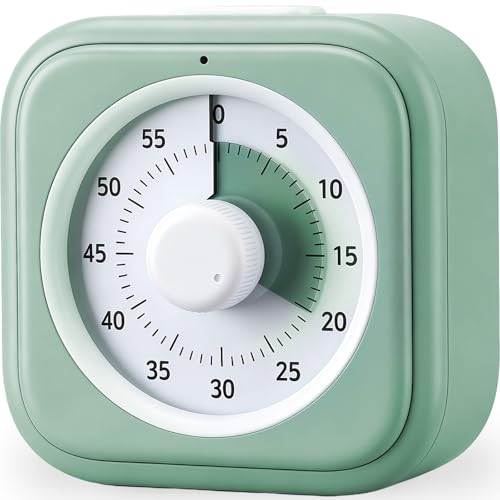
Features a clear, silent countdown with a green disk that shrinks as time passes. It’s ideal for classrooms, kitchen use, or desk work where a quick glance reveals remaining time. Best for those who want a simple, screen-free timer with optional alarm at the end. Caution: ensure the timer stays level; some users may prefer a longer duration than 60 minutes for extended activities.
TIME TIMER Home MOD – Fern Green

Designed for home and school use, this 60-minute visual timer emphasizes calm transitions with a simple, intuitive dial. It’s especially helpful for homeschool routines, study blocks, and meetings. Best for environments where a single, steady countdown supports structure. Caution: some users may prefer more color variety in the display; consider pairing with other timers for diverse tasks.
Buying Guide: Visual Timers For Autism
What to prioritize
Look for a clear, intuitive display that can be understood at a glance. Visual progress (disks, bars, or rainbow segments) should be easy to interpret without extensive explanation. Silent operation or gentle alarms help reduce sensory overload while still signaling transitions.
Duration and versatility
Choose timers with durations that fit your typical activities. 5 to 15 minutes work well for short transitions, while 60 to 99 minutes cover longer tasks. A timer that supports count-up and count-down adds flexibility for varied routines and therapy sessions.
Ease of use
Simple, robust controls—like a single knob or button—are ideal for independent use by children. Rechargeable options reduce ongoing costs, while mechanical timers require less maintenance but may need replacements sooner.
Durability and safety
Prefer sturdy casings and safe, smooth edges. For younger children, look for timers with protective designs to prevent pinching or misuse of knobs. Consider magnet-backed models for easy placement on whiteboards or refrigerators.
Environment and noise
Silent timers work best in libraries, therapy rooms, and quiet classrooms. If an audible alert is needed, ensure the alarm is gentle and not disruptive to nearby learners.
Special considerations
For learners with autism or ADHD, a timer that reduces anxiety around transitions is valuable. Pair the timer with a simple, consistent routine or a visual schedule to reinforce predictable expectations.
Frequently Asked Questions
Q: What makes a visual timer effective for autism?
A: Clear visuals, predictable operation, and non-disruptive sounds help learners anticipate transitions and stay engaged without overwhelming sensory input.
Q: Should I choose a rechargeable timer or replaceable batteries?
A: Rechargeable models reduce ongoing costs and waste, while battery-powered timers can be simpler and more portable in some settings.
Q: Is silent operation important for classrooms?
A: Yes. Silent timers minimize distractions, enabling better focus during tasks and quiet transitions.
Q: How long should a visual timer be set for in a typical school day?
A: It depends on activities; common blocks range from 5 to 15 minutes for transitions and 15 to 60 minutes for longer tasks like reading or project work.
Q: Can visual timers help children with sensory needs?
A: Yes. The visual display and predictable cues support time awareness and independence, which can reduce anxiety during transitions.