When searching for walk assist options, prioritize stability, ease of use, and suitability for post-surgery or age-related mobility needs. This guide highlights five practical aids ideal for seniors, caregivers, and friends supporting elderly independence. Each pick targets different scenarios—from compact bedside stands to full standing frames—so you can choose the best fit for your living situation and daily routines.
Summary of selected products
| Product | Best for | Key Benefit | Limitation |
|---|---|---|---|
| Stand Assist Aid for Elderly (TerseFit) | Post-surgery and couch-to-stand use | 4-point base for stability, adjustable height | Not a walker; best as a stand-assist or grab rail |
| Adjustable Walking Cane (KingPavonini) | Lightweight mobility with extra balance support | 4-pronged quad base and dual handles | May require practice to master two-handle use |
| Vive Gait Belt (350 lbs) | Safe transfers and caregiver assistance | Seven padded handles for versatile grips | Assists transfers, not a mobility device on its own |
| Adult Standing Walker (DnyioVpl) | Standing support with a seat and wheels | Adjustable height and width for ergonomic use | Heavier and larger; best for home spaces with room |
| Drive Medical Folding Walker | Lightweight and portable mobility aid | Folds for storage; 5-inch wheels for multi-surface use | Requires active use; not a seated option |
Stand Assist Aid for Elderly

The Stand Assist Aid from TerseFit functions as a compact standing aid, couch-to-stand helper, and portable support rail. It is designed for seniors and post-surgery recovery, offering a wider base and a padded grip. Best for users who need steady assistance to rise from seats or beds, rather than full mobility walking. The 4-point base and 350 lb weight capacity improve stability on various floor surfaces. Easy assembly (three steps) makes it suitable for everyday use. A caution: while it provides stand-up support, it is not a substitute for a full walker when extensive walking is required. Ideal for arthritis relief and back-pain assistance in home environments.
Adjustable Walking Cane with Quad Base

The KingPavonini adjustable cane supports up to 300 lbs with a sturdy aluminum construction and a four-pronged base for added stability. The dual-handle design includes a primary offset handle with a foam grip and a secondary standing handle, allowing quick transitions from sitting to standing. This cane is best for individuals who need extra balance during step-in or stand-from-chair moments. A potential limitation is the dual-handle approach requiring some adaptation for new users. Choose this if you value versatility and lighter weight for travel or daily errands.
Vive Gait Belt with Handles

This gait belt is designed for safe transfers, featuring seven padded handles to accommodate caregivers from multiple angles. It supports up to 350 lbs and fits waists up to 51 inches. The quick-release buckle allows easy removal, while the padded support reduces caregiver strain during transfers. Best for assisting patients or loved ones during short-distance ambulation or positioning in chairs. Limitation: it is a transfer aid, not a stand-alone mobility device or walker.
Adult Standing Walker with Seat

This standing walker features a seat and wheels, blending standing support with the option to sit. It offers 10-level height adjustment and 5-level width adjustment, enabling tailored comfort for users within the 58–71 inch height range. Its sturdy carbon steel construction promises stability and controlled mobility. Best for users who need periodic seated rest during standing or walking practice. A caution: it may be bulkier than compact walking aids, so ensure sufficient floor space at home.
Drive Medical Folding Walker
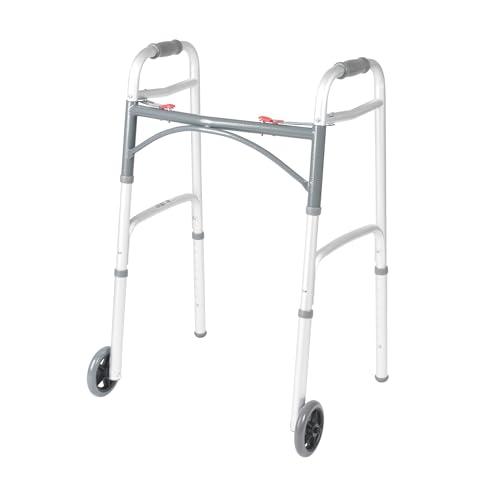
The Drive Medical Folding Walker provides durable aluminum construction with dual push-button operations and 5-inch front wheels for smooth, multi-surface mobility. It folds compactly for storage and supports up to 350 lbs. This unit is best for daily use in homes with a need for portable, lightweight support that can be folded when not in use. Limitation: not designed for prolonged sitting or as a standing aid; rely on separate seating or standing devices for rest breaks.
Buying Guide
What should I look for in a walk assist for an elderly loved one?
Prioritize stability, weight capacity, and ease of use. Consider whether the user needs a stand-up aid, a cane with extra support, a transfer belt for caregivers, or a standing walker with a seat. Check whether the product fits the user’s height range and space at home. Look for non-slip bases, padded grips, and simple setup.
Does the space in my home affect the choice?
Yes. Compact devices like a stand assist or foldable walker work best in smaller rooms or bathrooms. A standing walker with wheels and a seat is ideal for rooms with enough space to maneuver and provides rests between standing sessions. Ensure doorways and hallways are wide enough for the chosen device.
Who benefits most from each type?
- Stand Assist Aids: Best for easier transitions from sitting to standing, ideal for post-surgery recovery and arthritis relief.
- Four-Pronged Walking Canes: Better for lightweight support and balance with a portable profile for travel.
- Gait Belts: Best for caregivers assisting transfers and helping prevent caregiver injury during mobility tasks.
- Standing Walkers with Seats: Suitable for longer standing periods with occasional seating breaks.
- Folding Walkers: Great for portability and quick storage, useful for travel or compact homes.
What are common limitations to watch for?
Stability vs. portability is a trade-off. Some devices are excellent for standing support but not designed for continuous walking. Ensure weight limits meet user needs, and confirm that any multi-handle or dual-handle designs are comfortable to use. Consider the user’s ability to learn new mechanisms and whether ongoing assistance is needed during initial use.
How do I integrate these aids into daily routines?
Place stand assist devices near seating and entryways for easy use. Keep gait belts in reach of caregivers and identify a clear transfer path from bed to chair to bathroom. Schedule short practice sessions to build confidence, gradually increasing walking or standing time as comfort improves. Regularly inspect bases and grips for wear.
What about safety and insurance considerations?
Some items may be eligible for FSA or HSA reimbursement if prescribed or recommended by a healthcare professional. Check with providers about coverage for assistive devices. Always follow manufacturer weight limits and usage guidelines. Use non-slip mats and ensure proper lighting to reduce fall risks.
FAQ
- Are stand assist devices suitable for all seniors?
- Can a gait belt replace a walker?
- Is a four-pronged base safer than a single-point cane?
- Do standing walkers require assembly?
- How should I measure height to fit an adjustable cane?
- What maintenance is needed for folding walkers?