Yes, the right walker can support safe ambulation, balance, and independence for children with special needs. This guide highlights five highly relevant options that emphasize stability, adjustability, and comfort. Each choice is suited to different needs—from postural support during rehabilitation to everyday mobility at home or in therapy centers. Read on to compare which walker best fits your child’s size, activity level, and goals.
Summary table of selected products
| Product | Best For | Key Benefit | Limitations |
|---|---|---|---|
| Rehabilitation Walker for Children – Morimoe | Active rehabilitation, up to 330 lbs frame | Anti-tip wheels, safety brake, foldable | Heavy when folded for travel; assembly required |
| KA1200-2GKB Nimbo Posterior Walker | Lightweight postural support; height-adjustable | 5″ wheels, front swivel lock | Posterior design may not suit all indoor layouts |
| GHOSOONE Six Wheel Walker | Hemiplegia or postoperative rehab; multi-cushion comfort | Six wheels, adjustable height, anti-slip seats | Bulkier footprint; may require more storage space |
| Folding Walker Brown | Daily walking support; easy folding for storage | Adjustable height; breathable cushion | Seat could be less supportive for longer rests |
| Folding Walker Pink | Daily use; younger children or smaller frames | Breathable cushion; adjustable height | Similar limitations to the brown variant |
Rehabilitation Walker for Children — Morimoe

Best for: active rehabilitation with high load tolerance and safety requirements. This walker uses thickened stainless steel and a reinforced welded frame with a 330 lbs capacity, suited for growing children during therapy. Anti-tip wheels and a robust brake system provide enhanced stability, while a foldable design supports easy transport and storage. The ergonomic frame aligns with a child’s natural posture to reduce strain.
Why it’s selected: The combination of durable construction, anti-tip features, and a lockable braking system makes it a strong option for families prioritizing safety during rehabilitation sessions at home or in clinics. The higher weight capacity accommodates a range of body sizes over time.
Best for whom: Families seeking a long-term rehab companion that can endure repeated sessions and newer therapists requiring reliable, adjustable support. Avoid if: you need a very lightweight walker for frequent on-the-go use or minimal storage space, since folding adds some bulk.
Caution: Ensure proper assembly and regular brake checks to maintain safe operation. The base is wide to prevent tipping but may require larger doorways or room clearance.
KA1200-2GKB Nimbo Posterior Walker — Inspired by Drive

Best for: lightweight, height-adjustable support with postural guidance. This walker emphasizes postural stability and easy portability. It features five-inch wheels, a soft grip, and a front-wheel swivel lock to prevent backward movement, making it useful for sessions that emphasize upright alignment and controlled ambulation.
Why it’s selected: The combination of adjustable height, sturdy aluminum construction, and a one-directional wheel mechanism provides predictable movement while preventing unsafe backward motion, which is valuable for new walkers or children focusing on posture during early ambulation.
Best for whom: Choose this if you want a balance between lightness and control in a pediatric walker. Avoid if: your child is very active outdoors where larger wheels and a broader base would offer better traction.
Caution: Review wheel locks and ensure smooth operation before each use to avoid unintended wheel movement.
Six Wheel Walker for Cerebral Palsy — GHOSOONE
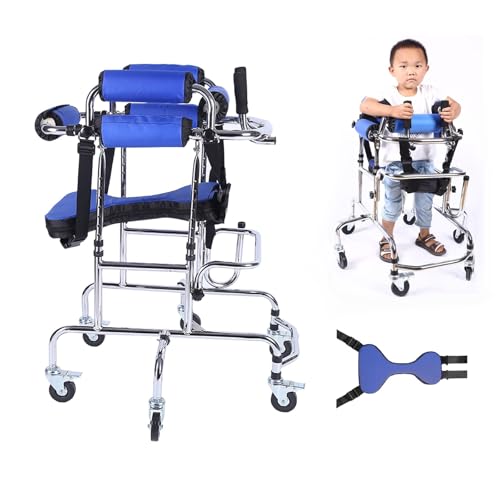
Best for: children needing robust multi-wheel stability and cushioned comfort. This six-wheel model uses thickened stainless steel with anti-slip, wear-resistant solid tires and double cushions for seating. The adjustable height and breathable cushions support longer sessions and varied indoor layouts.
Why it’s selected: The six-wheel design offers better balance across uneven surfaces and turns, while dual cushions provide comfort for longer rehabilitation periods. The design prioritizes upright posture and safer movement for growing children.
Best for whom: Choose this if your child benefits from a more stable base and comfortable seating during therapy or extended walking. Avoid if: you have tight storage space or need a highly portable option due to its larger footprint.
Caution: The walker’s size may require a larger play or therapy space for maneuvering, especially when turning or at full height.
Folding Walker for 31-47in Children — Brown
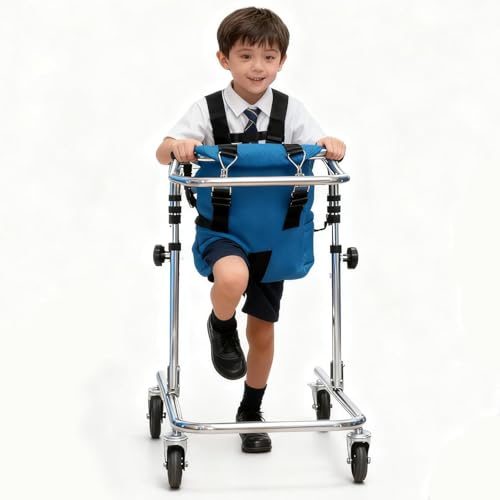
Best for: children needing versatile daily walking support with easy storage. This folding walker supports standing training, walking assistance, and seated rest with a breathable cushion. It adapts to heights from 31.5″ to 47.2″ to accommodate growing users.
Why it’s selected: The combination of a folding frame and a fully breathable cushion makes it practical for daily use at home or school. It’s a good fit for rehabilitation routines that include sit-to-stand transitions and seated breaks.
Best for whom: Ideal for families prioritizing compact storage and quick setup. Avoid if: the child requires specialized postural guidance beyond standard upright support.
Caution: Check fit for seat height and ensure the cushion remains intact during folded storage and transport.
Folding Walker for 31-47in Children — Pink

Best for: smaller children or those who prefer a lighter, easier-to-maneuver folding walker. Like the brown variant, this model offers adjustable height, a breathable cushion, and multi-use capabilities for standing, walking, and resting.
Why it’s selected: The pink variant provides a similar feature set with a child-friendly appearance, reinforcing comfort and independence during therapy and daily activities.
Best for whom: Choose this if style and size alignment with a younger child are important alongside practical daily use. Avoid if: you need more aggressive postural support or a larger walking base for outdoor use.
Caution: As with the brown model, ensure proper height adjustment and cushion integrity to maintain comfort and posture alignment during use.
Buying Guide
What should I consider when choosing a walker for a child with special needs?
- Height and weight range: Look for adjustable height and weight capacity that matches your child’s growth and rehab needs.
- Stability features: Prioritize anti-tip mechanisms, locking brakes, and wheel configurations (two- vs six-wheel) based on indoor vs outdoor use.
- Posture support: Some walkers emphasize upright posture and trunk alignment; others focus on basic balance. Choose according to therapy goals.
- Comfort and fit: Cushioned handrails and seats improve comfort during longer sessions. Breathable materials help with heat and sweat management.
- Portability and storage: Folding designs ease transport and storage in small spaces, but may add assembly steps.
- Durability and materials: Stainless steel frames offer longevity; aluminum frames reduce weight but may have lower load limits.
- Usage environment: Indoor homes, therapy clinics, or outdoor playgrounds require different wheel types (solid vs pneumatic) and base width.
How do I ensure a walker fits my child?
- Measure standing height and arm reach to set appropriate handle height and seat positioning.
- Check wheelbase width to clear doorways and navigate tight spaces.
- Test ease of folding and unfolding; ensure locks engage securely.
- Consider ongoing needs: growth, activity level, and whether a posterior or anterior configuration is preferred.
What are common advantages and trade-offs among the options?
- Six-wheel walkers generally offer more stability at the cost of footprint and potential maneuvering space.
- Posterior walkers often promote upright posture and leg movement but may be less intuitive indoors for younger children.
- Foldable walkers save space but may involve more setup time and fewer rigid postural supports.
What maintenance should be performed routinely?
- Inspect wheels, brakes, and locks for smooth operation before each use.
- Check frame welds and joints for any signs of wear or loosening.
- Clean cushions and handgrips to maintain grip and comfort.
What about safety cautions?
- Always supervise children during ambulation and use; never leave a child unattended with a walker.
- Ensure doorways and hallways are clear to prevent collisions or tipping hazards.
- Use appropriate restraints or seating features when the walker includes a seat—never rely on arms alone for support.
Frequently asked questions
- What is the best walker for a child with postural needs?
- Can a walker replace a stroller for daily activities?
- How do I know if my child is the right height for a walker?
- Are foldable walkers safer for travel?
- What features improve safety for younger children?
- Should I consult a clinician before buying?
Walkers emphasizing posture support and adjustable height, such as posterior or semi-posterior designs with secure wheel locks, are typically preferred for postural goals.
Walkers are designed for standing and short-term ambulation; strollers or gait trainers may be needed for longer outings or when resting is required.
Proper height allows the elbows to bend slightly (about 15–30 degrees) when the hands rest on the handles, with the shoulders relaxed.
Foldable models are convenient for transport but ensure locking mechanisms remain secure when in use and that wheels are not misaligned after transit.
Anti-tip bases, lockable brakes, and cushioned grips/seats that reduce slipping help enhance safety for younger users during therapy and daily activities.
Yes. A clinician or physical therapist can recommend a configuration (posterior vs anterior) and specific features aligned with your child’s rehabilitation plan.