Choosing the right walker can support independence, balance, and safety during stroke recovery. This guide highlights five proven options designed for stability, adaptivity, and comfort, with features tailored to users needing extra support, posture alignment, and easy transitions between standing and seated rest. Each product below is evaluated on build quality, weight capacity, ease of use, and suitability for daily living. Use the Buying Guide at the end to compare essentials and make an informed choice.
| Product | Key Strengths | Weight Capacity | Adjustability |
|---|---|---|---|
| Days Lightweight Rollator | Four 8″ wheels, lockable brakes, padded seat | 364 lb | 34.25″–39″ height |
| Synaiolma Walkers For Seniors | 10-level height, wide base for stability | 220+ lbs | Height 45.67″–55.12″, Width 7.87″–13.78″ |
| Morimoe Standing Rehabilitation Walker (No Hand Brake) | 8 wheels, anti-tilt design, folding | 330 lbs | Height 45″–55″, Width 13″–20″ |
| FQEXNFW Adjustable Standing Walker | Pneumatic lift, dual brake system | 220 lb | Height 58″–75″, Seat width adjustable |
| Lumex ColorSelect Adult Walker | Lightweight, folding design, 5″ wheels | Supports 300 lb | Collapsible frame for transport |
Note: All products listed are designed to aid mobility during stroke rehabilitation, with a focus on stability, ease of use, and safe transitions between positions. Consider your height, weight capacity, hand strength, and daily living environment when evaluating options.
Days Lightweight Rollator

The Days rollator is crafted for mobility with four 8-inch wheels that help users maintain balance on varied surfaces. Lockable hand brakes offer controlled stopping, essential for users who require steady deceleration. A padded seat provides a convenient rest place during outings or therapy sessions, helping to reduce fatigue. The frame uses light aluminum, boosting ease of use for daily tasks. Height is adjustable from 34.25 to 39 inches, and the overall footprint is 24.75 inches square. The seat measures 13 by 14 inches, with a handles width of 19 inches and a ground clearance around 24.5 inches. This model emphasizes stability and portability for elderly users or those needing reliable outdoor support.
Why it suits stroke recovery: The combination of adjustable height, a stable four-wheel base, and a seated rest option supports longer walks, balance training, and safe cruising between rooms or outdoors. The lightweight construction aids caregivers when loading into vehicles or navigating tight spaces. Its capacity and design align with goals to increase mobility and independence during rehabilitation.
Synaiolma Seniors Walking Aid
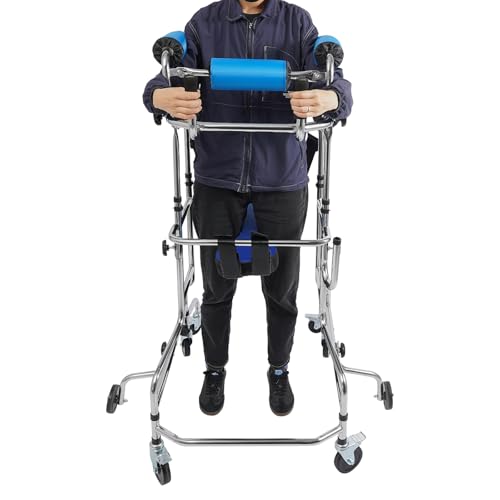
Synaiolma’s walker features a robust carbon steel frame with a wide base for enhanced lateral stability. Its design accommodates users with limited mobility seeking safer, steadier steps. The product supports up to 220 pounds and includes two side wheels plus two rear wheels to prevent unwanted rolling or tipping. Height offers ten levels from 45.67 to 55.12 inches, and width has five levels from 7.87 to 13.78 inches, with bolt-based adjustments to tailor fit. This flexibility makes it suitable for a variety of body sizes and therapy routines, including standing balance work and gait re-education.
Why it suits stroke recovery: A strong, stable base and adjustable geometry help users practice upright posture and controlled ambulation. The multi-level adjustments allow alignment with therapists’ prescribed postures, promoting safer, more persistent retraining of walking patterns. The sturdy build also provides confidence for caregivers during home therapy sessions.
Morimoe Standing Rehabilitation Walker (No Hand Brake)

This Morimoe model is designed as a comprehensive rehabilitation aid with an eight-wheel anti-tilt framework to reduce tipping risk. It includes a wide base and non-slip tires to maintain speed control and safety during therapy sessions. The walker supports up to 330 pounds and is suited for adults 58–71 inches tall. Height adjusts across ten levels (45 to 55 inches) and width across five levels (13 to 20 inches), enabling ergonomic alignment with a user’s body dimensions. The unit folds easily for storage and transport, facilitating home-based rehabilitation and outpatient therapy setups.
Why it suits stroke recovery: The anti-tilt design minimizes accidental tipping, a common concern during upper- and lower-limb rehabilitation. The integration of folding capability and solid braking options provides a practical, versatile solution for therapists and families, enabling safe practice in small spaces and during transition between exercises.
FQEXNFW Adjustable Standing Walker

FQEXNFW presents a standing walker with a pneumatic lift that eases transitions from standing to seated positions. Its dual brake system—hand and elbow brakes—adds a level of control important for users who may have limited hand strength or coordination. The walker is rated up to 220 pounds and features an anti-tip design with a sturdy frame for safety during use. Height is adjustable (58 to 75 inches), and it is suitable for users within a tall height range, with seating options designed to accommodate rehabilitation exercises. A one-touch height adjustment helps tailor the fit to a user’s stature and therapy plan.
Why it suits stroke recovery: Pneumatic lift support reduces the effort needed to shift from standing to sitting, promoting safe transitions during therapy. The independent braking and anti-tip design provide crucial safety for practicing gait tasks under varying speeds and terrains. This model can be especially beneficial for taller users needing a stable, adjustable platform for balance training and mobility practice.
Lumex ColorSelect Adult Walker

The Lumex ColorSelect walker emphasizes portability with a lightweight folding frame and compact design, making it easier to handle outside the home or in small rooms. Equipped with 5-inch wheels and a maximum recommended load of 300 pounds, this model balances stability with simple maneuverability. The frame folds for storage and travel, and the handgrip contours offer a comfortable grip for users with varying grip strength. It is well-suited for daily use and light standing/walking sessions in rehabilitation programs, particularly when space is limited.
Why it suits stroke recovery: The folding, lightweight design reduces caregiver burden and enables easier integration into daily routines. The 300-pound capacity supports a broad range of users, and the wheel setup provides reliable ground contact for steady ambulation. Hand grips are designed to minimize fatigue during longer therapy sessions and daily activity cycles.
Buying Guide: Key Purchase Considerations
- Stability vs. Mobility: A wider base and anti-tilt features reduce tipping risk, which is important during early gait retraining. Consider models with solid wheel options and a stable frame rather than lightweight designs that may feel wobbly.
- Weight Capacity: Stroke patients vary in strength; choose a walker that exceeds the user’s weight and provides room for occasional therapy equipment or added seats for resting after sessions.
- Adjustability: Height, width, and seat depth adjustments tailor the fit to the user’s height, arm reach, and comfort. Ensure the device can be customized to therapist-recommended postures.
- Brakes and Safety: Lockable hand brakes and dual-brake systems offer safe control in various environments. Eliminate models with weak braking or hard-to-reach controls.
- Seat and Rest Options: A padded seat offers convenient rest during therapy and outings. Consider seat width, depth, and height to accommodate seating comfort and transfer ease.
- Portability: Folding frames and lightweight materials simplify storage and transport. If trips or home visits are common, prioritize models that fit car trunks and stair-friendly households.
- Surface Adaptability: Indoor usage often requires smoother operation on tile and wood floors, while outdoor use calls for reliable wheel traction and ground clearance.
In selecting a walker for stroke recovery, weigh how often the user will be standing, walking short distances, and needing brief rests. For caregivers, assess how easy it is to move, adjust, and store the device. By focusing on stability, adjustability, and safety features, families can choose a walker that supports consistent rehabilitation while promoting independence.