When selecting a weighted blanket for autism, look for even weight distribution, durable construction, and breathable fabrics. This guide highlights five top options that are well-suited for sensory seekers, children, and adults who prefer a calmer, more grounded bedtime routine. Each product section explains who it’s best for and why it stands out, plus practical cautions to help you choose confidently.
| Product | |||
|---|---|---|---|
| HOSUKKO Weighted Blanket | 5 lbs • 36″ x 48″ | Breathable microfiber with 7-layer structure; dinosaur design | Young children or small laps; playful design aids bedtime routine |
| yescool Weighted Blanket (Adults) | 20 lbs • 60″ x 80″ | 7%-10% body weight guidance; tight stitching; breathable | Adults seeking full-night comfort and stable pressure |
| CuteKing Weighted Blanket | 7 lbs • 40″ x 60″ | 12-layer design with even bead distribution | Older kids or adults needing balanced pressure |
| Kidaddle Weighted Lap Blanket | 5 lbs • 19″ x 22″ | Two textures (microfiber and plush minky) | Preschoolers and kids for travel or quiet activities |
| Kivik Weighted Blanket | 3 lbs • 36″ x 48″ | Soft, durable, child-friendly design with focus on calm | Younger children who benefit from minimal weight |
HOSUKKO Weighted Blanket — 5 lb Blue Dinosaur
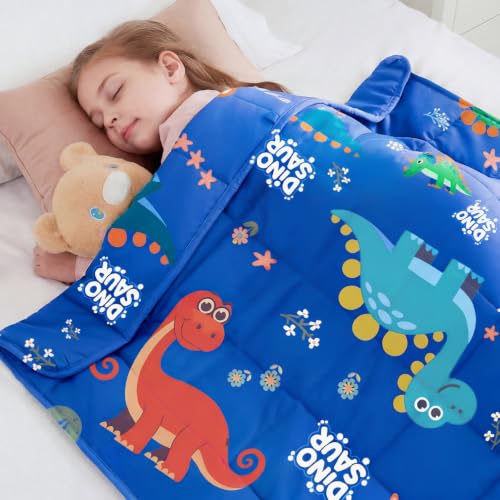
The HOSUKKO blanket uses evenly distributed weight and a compact 5-pound option, ideal for small laps or wrists during naps and travel. The blue dinosaur print adds a comforting visual cue for kids and helps integrate the blanket into a calming pre-sleep routine. The 7-layer breathable microfiber fabric supports year-round use by promoting airflow while maintaining warmth. Best for children who respond to visual cues when settling down and for travel-friendly routines. A caution: this lighter option may not provide the deeper pressure some users require for longer sleep periods.
yescool Weighted Blanket 20 Lbs — Adults

This 20-pound blanket for adults follows the recommended range of 7%-10% of body weight, offering substantial pressure for a grounding effect. The queen-size 60″ x 80″ fits fully atop a standard bed and minimizes overhang. Its 7-layer construction with dense stitching reduces bead leakage while allowing breathability. Choose this for taller or heavier individuals who prefer a fully enveloping feel through the night. Caution: heavier weights can feel too intense for first-time users; gradual acclimation is advised.
CuteKing Weighted Blanket — 7 lbs

The CuteKing blanket employs a 12-layer design that helps prevent bead leakage and ensures even weight distribution. The 7-pound option is suitable for children or smaller adults who need steady but not overpowering pressure. Best for those who want a comfortable, balanced feel without excessive warmth. Limitation: heavier versions may be preferred for deeper pressure needs, but this option remains easy to manage for daily use.
Kidaddle 5 lb Weighted Lap Blanket

This compact lap pad offers gentle pressure for playtime, reading, or car rides, with a plush minky texture on one side and microfiber on the other. Its 5-pound weight is suited for younger children who may benefit from a lighter, comforting press. The dual texture provides a sensory-friendly option, but its size makes it less suitable as a full-bed blanket for older children or adults.
Kivik Weighted Blanket — 3 lbs

The Kivik blanket provides a lighter option with a gentle hug-like effect suitable for younger children or first-time users who need minimal pressure to start. It features OEKO-TEX certified fabric and reinforced stitching for durability. Choose this when introducing weighted therapy or for children who respond best to soft, moderate pressure rather than heavier weights. Limitation: not ideal for adults or for those who need substantial sensory input at bedtime.
Buying Guide: Key Purchase Considerations
- Weight appropriateness: For most users, aim for roughly 10% of body weight, with adults typically in the 12–20 lb range and children using lighter options like 5–7 lbs. Starter users may begin with 3–5 lbs depending on comfort.
- Size and coverage: Bed-sized blankets should fully cover the torso, while lap pads are better suited for travel or desk use. Consider whether the user needs full-bed coverage or a smaller, targeted pressure.
- Fabric and comfort: Look for breathable fabrics (microfiber, cotton blends) to prevent overheating. Two-side textures (microfiber and plush) can offer varied sensory experiences.
- Bead integrity and construction: Dense stitching and multi-layer designs help prevent bead leakage and promote even weight distribution.
- Durability and cleaning: Determine whether machine washing is feasible. Some blankets require spot cleaning or dry cleaning; others offer machine-washable options.
- Design and visual cues: Colorful patterns or familiar themes (dinosaurs, stars) can make the blanket more inviting for kids, supporting routine adherence.
Frequently Asked Questions
- What weight is best for young children with autism?
- Can weighted blankets help with sensory processing?
- Are heavier blankets better for autism therapy?
- What should I consider for travel use?
- How long does it take to adjust to a weighted blanket?
- Is machine washing safe for weighted blankets?
For younger children, a weight around 5 pounds or 7 pounds is often appropriate, depending on the child’s body weight and comfort. Start lighter to gauge tolerance and gradually increase if needed.
Weighted blankets provide deep pressure input that can promote relaxation and focus, potentially helping with sleep onset and reduce restlessness in some individuals with autism.
Not necessarily. The optimal weight depends on individual needs and tolerance. Heavier blankets may provide stronger calming effects for some, while others may find them overwhelming.
For travel, a smaller, lighter blanket (like a 5 lb lap pad) is easier to carry and can still offer calming pressure during car rides or plane trips.
Most users adapt within 7–14 days. Start with 20–30 minutes of use and gradually extend duration as comfort increases.
Care varies by model. Some are machine washable, while others require spot cleaning or dry cleaning. Always follow the manufacturer’s care instructions.