Seeking wireless hearing aids for TV that improve speech clarity without disturbing others? This guide highlights five top options suited for different needs—whether you prioritize long battery life, ultra-low latency, or simple setup. Each pick targets a specific buyer type, from seniors needing easy use to hearing-aid users seeking direct TV connectivity. A quick summary table follows to help you compare essentials at a glance.
| Product | Best For | Key Benefit |
|---|---|---|
| Earbay Wireless Headphones for TV Watching | Seniors or family watchers | Multiple connection options for universal compatibility |
| SKYCOMET Wireless Headphones for TV | Active households | Long battery life with charging dock |
| AIERTING Phonak TV Connector | Hearing-aid users | Direct TV streaming to compatible aids |
| WallarGe Neckband Hearing Amplifier | Everyday listening and TV | Personal amplification with neckband design |
| Avantree Audikast 4 | Auracast users and classic Bluetooth | Dual listening modes for diverse devices |
Earbay Wireless TV Headphones With Transmitter

Best for easy setup and versatile connections. These wireless TV headphones support optical, 3.5mm AUX, and RCA cables, enabling universal TV compatibility. Bluetooth pairing is available for TVs without dedicated ports. This makes them ideal for seniors or anyone seeking a private, quiet viewing experience without missing spoken dialogue. The design emphasizes comfort with protein leather and memory foam ear cushions for extended sessions.
Who this is for: primarily seniors or households needing flexible connection options. Why selected: top score for compatibility and straightforward setup, reducing the need for adapters. Caution: be aware that Bluetooth pairing may introduce a minor delay with certain TV models if not using the wired options.
SKYCOMET Wireless TV Headphones With Dock

Best for private listening without disturbing others. These headphones offer independent volume control and a long wireless range up to 30 meters (100 feet), making them suitable for larger rooms or open layouts. They use Bluetooth 5.2 with ultra-low latency under 40 ms, helping keep audio aligned with on-screen action for movies and sports. A charging dock supports easy storage and power.
Who this is for: households wanting minimal disruption and freedom to move around. Why selected: best balance of long range, low latency, and extended playtime. Caution: ensure your TV supports Bluetooth 5.2 or use the included dock for optimal latency control.
AIERTING Phonak TV Connector
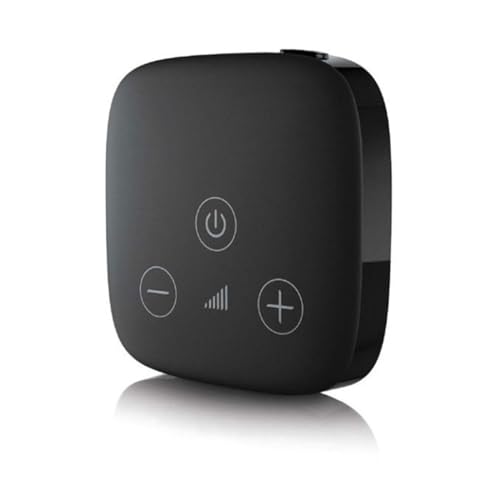
Best for hearing aid users seeking direct TV streaming to compatible devices. The device plugs into TVs and supports direct connectivity to Lumity, Paradise, and Marvel hearing aids. It uses USB or power plug for operation and enables automatic hearing aid pairing. A multi-listener capability lets family members connect to one transmitter with compatible aids.
Who this is for: people with compatible hearing aids who want a seamless TV audio bridge. Why selected: uniquely targets hearing-aid wearers seeking direct streaming. Caution: not compatible with all hearing aids, so confirm model compatibility before purchasing.
WallarGe Rechargeable Neckband Hearing Amplifier

Best for practical amplification during TV viewing and daily conversations. This neckband amplifier uses a built-in microphone to amplify surrounding sounds and provides individual volume control on each side. It charges quickly and delivers long battery life—about 35 hours per full charge—making it a strong choice for long movie nights or falls asleep listening.
Who this is for: users who want a simple, wearable amplification device with adjustable volume. Why selected: straightforward operation and long battery life. Caution: not a dedicated wireless TV headset, so lip-sync alignment can vary with certain content types.
Avantree Audikast 4 Auracast & Bluetooth Transmitter

Best for Auracast-enabled users and classic Bluetooth devices. The Audikast 4 supports Auracast for broadcast audio to compatible devices and also includes classic Bluetooth for ordinary headphones. It requires an Optical or AUX output from the TV, as HDMI-only TVs aren’t supported. This dual-mode transmitter is future-ready for hearing-aid users and tech enthusiasts alike.
Who this is for: users with Auracast-enabled devices or those who want versatility across Bluetooth and broadcast audio. Why selected: flexibility to pair with multiple listening devices. Caution: ensure your TV has Optical or AUX output; many newer models rely on HDMI, which is not supported here.
Buying Guide
Why choose wireless TV headphones or related hearing-aid accessories? Consider these factors to match your setup:
- Compatibility: Check TV outputs (Optical, AUX, RCA, or Bluetooth) and whether your hearing aids support direct streaming.
- Latency: For clear lip-sync, select devices with low latency (ideally under 40 ms) and consider wired options if timing is critical.
- Battery life: Long sessions require extended playtime and easy recharging, preferably with a dock or fast charging.
- Comfort: Look for adjustable headbands, soft ear cushions, and lightweight designs for prolonged use.
- Privacy vs. shared listening: Private listening favors closed-back designs; shared listening may benefit multi-user dongles or multi-listener setups.
- Ease of setup: Simple plug-and-play arrangements reduce the need for adapters and troubleshooting.
Common buyer questions
- Do these devices work with all TVs?
- Which option reduces lip-sync delay the most?
- Can I connect hearing aids directly to a TV without extra gear?
- How long does the battery typically last on a single charge?
- Is there a noticeable difference between Auracast and classic Bluetooth?
- What should I choose if multiple family members want to listen?
FAQs
- Are wireless TV headphones easy to install? Yes. Most provide multiple connection modes and clear on-screen instructions.
- What is latency and why does it matter? Latency is the delay between TV audio and video; lower latency improves lip-sync.
- Can these devices help with hearing difficulties beyond dialogue? Many models emphasize speech clarity and volume control, aiding overall comprehension.
- Can I use these with soundbars? Some devices support TV outputs that also feed into soundbar setups; verify compatibility before buying.