Best wrist blood pressure monitors provide quick, reliable readings at home with user-friendly features. This guide highlights five top options, showing who each model is best for and why it stands out. Ideal buyers include seniors seeking large displays, travelers needing compact devices, or households that want dual-user memory for tracking health trends over time. Below is a concise product comparison to help you decide quickly.
| Product | Best For | |
|---|---|---|
| Oklar Wrist Blood Pressure Monitor | Dual-user households; users needing voice guidance | Dual 240-reading memory for 2 users; fast 35-second measurements; voice broadcast; rechargeable |
| MMIZOO Wrist Blood Pressure Monitor | Families needing simple large display | Large LCD display; 99 memory per user; carry case; 2 users |
| FDA-Cleared Wrist Blood Pressure Monitor (P PANACARE) | Travelers and office use; slim portable design | Automatic measurement; updated slim design; adjustable cuff; auto power-off |
| OMRON Gold Wrist Monitor | Users needing Irregular Heartbeat Detection and app connectivity | Dual-user memory; irregular heartbeat detection; morning spike indicators; app capable |
| BENECEN Wrist Blood Pressure Monitor | Everyday home use; simple 30-second checks | 199 memory with date/time; quick 30-second readings; batteries included |
Note: All models listed are wrist-borne devices designed for home use. Consider cuff size, display readability, memory capacity, and data tracking when choosing the right monitor for your needs.
Oklar Wrist Blood Pressure Monitor

The Oklar model offers convenient dual-user memory with up to 240 readings, making it ideal for couples or family use. It provides fast, automatic measurements in about 35 seconds and includes a voice broadcast feature to guide users through the process, which is especially helpful for visually impaired readers. The cuff accommodates 4.92-8.46 inches, and the unit is rechargeable for reduced ongoing costs. Best for: shared households that value quick results and audio guidance. Caution: battery life and charging time may affect portability if power isn’t readily available.
MMIZOO Wrist Blood Pressure Monitor
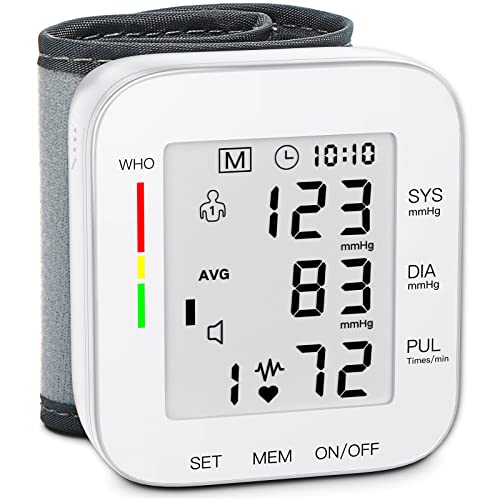
The MMIZOO monitor emphasizes readability with a large LCD display and voice feedback. It supports two users with 99 readings each, making it suitable for households that want to keep separate health records. The device is designed for home use and uses a cuff that fits a typical adult wrist. Best for: users who prioritize a large display and straightforward memory. Caution: ensure cuff fit for users with smaller wrists to avoid measurement bias.
FDA-Cleared Wrist Monitor (P PANACARE)

PANACARE’s FDA-cleared monitor focuses on portability and ease of use with automatic measurements and a large, backlit LCD display. The adjustable cuff fits most adults, making it a strong option for travel or office use. Best for: users who need a slim, portable device with dependable daily readings. Caution: some users may require a larger cuff for very wide wrists.
OMRON Gold Wrist Blood Pressure Monitor

Omron’s Gold model is a widely recognized option with dual-user memory for tracking up to 200 readings. It includes Irregular Heartbeat Detection and a High Morning Average Indicator to help identify cardiovascular risk patterns. App connectivity is supported in newer setups, aiding long-term monitoring. Best for: users who want medical-grade tracking features and compatibility with digital records. Caution: wrist monitors can be less effective for very muscular wrists; consider an upper-arm model if the fit is challenging.
BENECEN Blood Pressure Monitor

The BENECEN monitor emphasizes a quick 30-second reading with 199 memory storage, including date and time stamps for easy trend tracking. It is powered by two AAA batteries and includes a carrying case for portability. Best for: budget-conscious buyers who want reliable memory and simple operation. Caution: battery-powered operation means you’ll want spare batteries on hand for travel.
Buying Guide: Key Considerations for Wrist Blood Pressure Monitors
- Memory capacity and dual-user support: If two people will use the device, look for models that store readings for two users with timestamps for trend analysis.
- Display readability: A large, backlit LCD helps users read results in different lighting conditions, especially for seniors.
- Accuracy and cuff size: Ensure the cuff fits your wrist circumference. Wrist monitors can be sensitive to placement and fit; some users may prefer upper-arm models for higher accuracy in certain situations.
- Ease of use: One-button operation and automatic inflation/deflation simplify daily monitoring, particularly for users with limited dexterity.
- Additional health indicators: Features like irregular heartbeat detection or morning risk indicators can provide actionable insights when discussed with a clinician.
- Power source and portability: Consider battery life, rechargeable options, and whether you need a compact device for travel.
- Data export and app compatibility: If long-term tracking matters, pick models that offer easy data transfer or app sync.
FAQ
- Are wrist blood pressure monitors as accurate as upper-arm models? Wrist monitors can be accurate when used correctly, but fit and placement are critical. Some users may achieve closer results with an upper-arm cuff.
- How many readings should I store? Dual-user devices with hundreds of readings offer robust trend analysis; choose a model with memory that matches your tracking needs.
- Do wrist monitors require calibration? Most consumer models do not require regular calibration, but follow the manufacturer’s maintenance guidelines for best results.
- Is Irregular Heartbeat Detection useful? Yes, it helps flag potential irregularities during readings, which you should discuss with a healthcare professional if detected.
- Can I travel with these devices? Yes, many wrist monitors are compact and come with a carrying case, making them convenient for travel; verify the cuff size for your wrist.
- Which feature matters most for seniors? A large backlit display, simple one-button operation, and clear audio or visual indicators are particularly helpful for seniors.